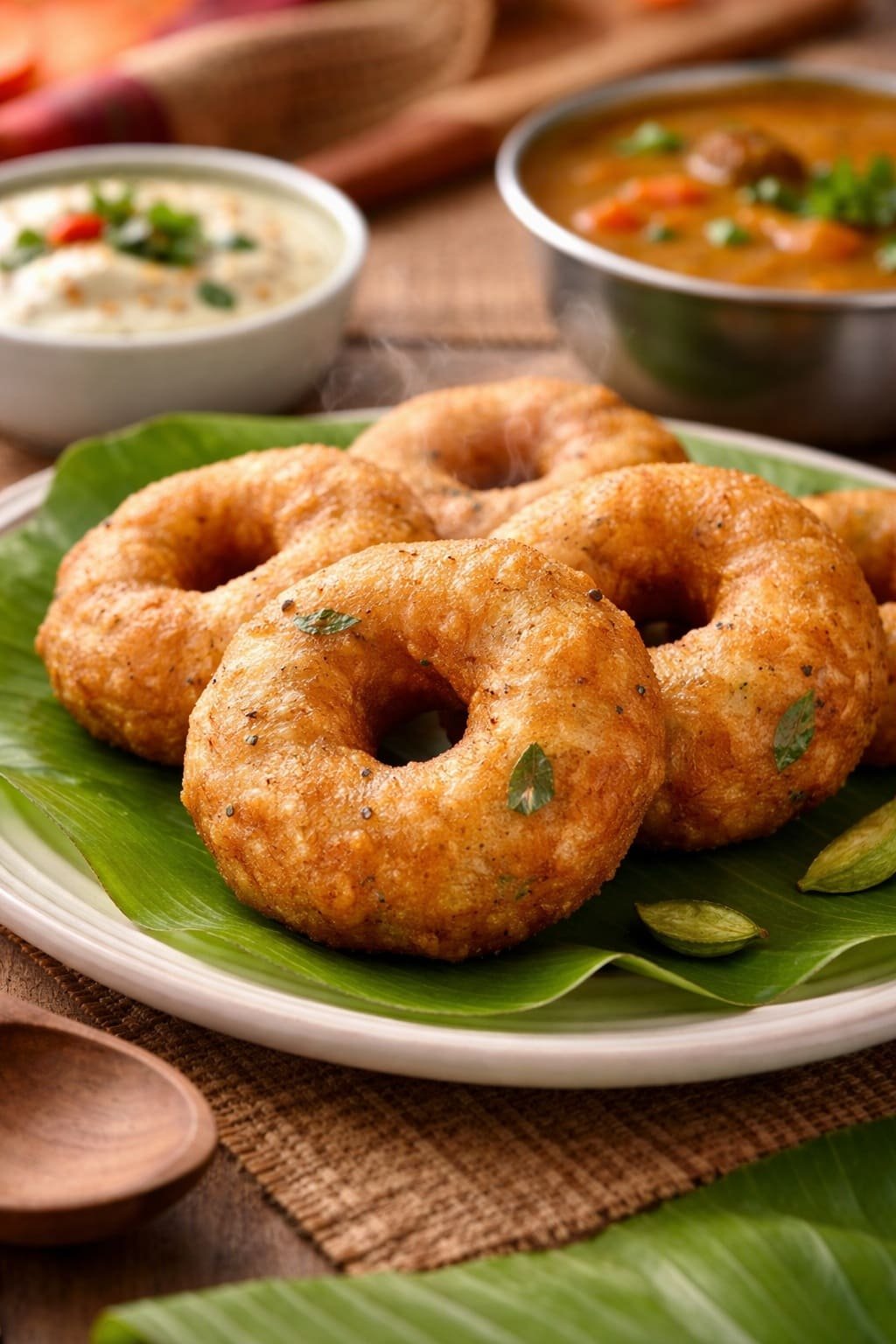
Vadas, the crispy, savory snacks from South India, are loved across the country for their crunchy texture and delicious flavor. They are a staple in South Indian breakfasts and are often served with sambar, coconut chutney, or simply enjoyed as a snack. But have you ever wondered why vadas traditionally have a hole in the centre? This seemingly simple feature actually has important culinary and cultural reasons behind it.
One of the main reasons vadas have a hole in the centre is to ensure they cook evenly. Vadas are typically made from lentil batter, which can be thick. If the batter is shaped into a solid disc without a hole, the centre may remain undercooked while the edges become crispy.
The hole allows hot oil to circulate through the middle during frying, ensuring that the vada is cooked uniformly and develops the perfect crunch all around.
The hole also helps reduce the overall frying time. With the centre exposed, hot oil reaches the inner part of the vada faster. This not only ensures even cooking but also makes the process quicker and more energy-efficient. For large batches, this small design makes a big difference in the kitchen.
During frying, vadas can puff up due to trapped steam in the batter. A solid disc without a hole may become uneven or dense in the centre. The central hole allows steam to escape and prevents the vada from becoming doughy or misshapen. It contributes to the light, airy texture that makes vadas so enjoyable.
Vadas are often lifted from hot oil using a slotted spoon. The hole makes them easier to handle during frying because the spoon can grip the vada more securely. Additionally, when served, the hole allows sauces like sambar or chutney to seep into the centre, enhancing flavor with every bite.
Apart from practical reasons, the hole in the centre has a traditional significance. In many South Indian households, the hole symbolizes completeness and balance. It also allows the vada to resemble a small ring, which makes it visually appealing and easy to arrange for festivals, meals, and temple offerings.
While traditional vadas almost always have a hole, modern chefs sometimes experiment with variations like mini stuffed vadas or baked versions, where the hole may be optional. However, for authentic taste, texture, and ease of cooking, the central hole remains a defining feature.
The hole in the centre of a vada is more than just a design choice—it’s a combination of practical cooking wisdom, culinary science, and cultural tradition. It ensures even cooking, reduces frying time, preserves the crispy texture, and even enhances the taste when paired with sambar or chutney.
Next time you enjoy a plate of hot, crispy vadas, take a moment to appreciate the humble hole in the centre—it’s the secret behind that perfect bite.
Image Credits: Created by ChatGPT using DALL·E (OpenAI).
To know more about our platform, visit our About Us page.


Comments