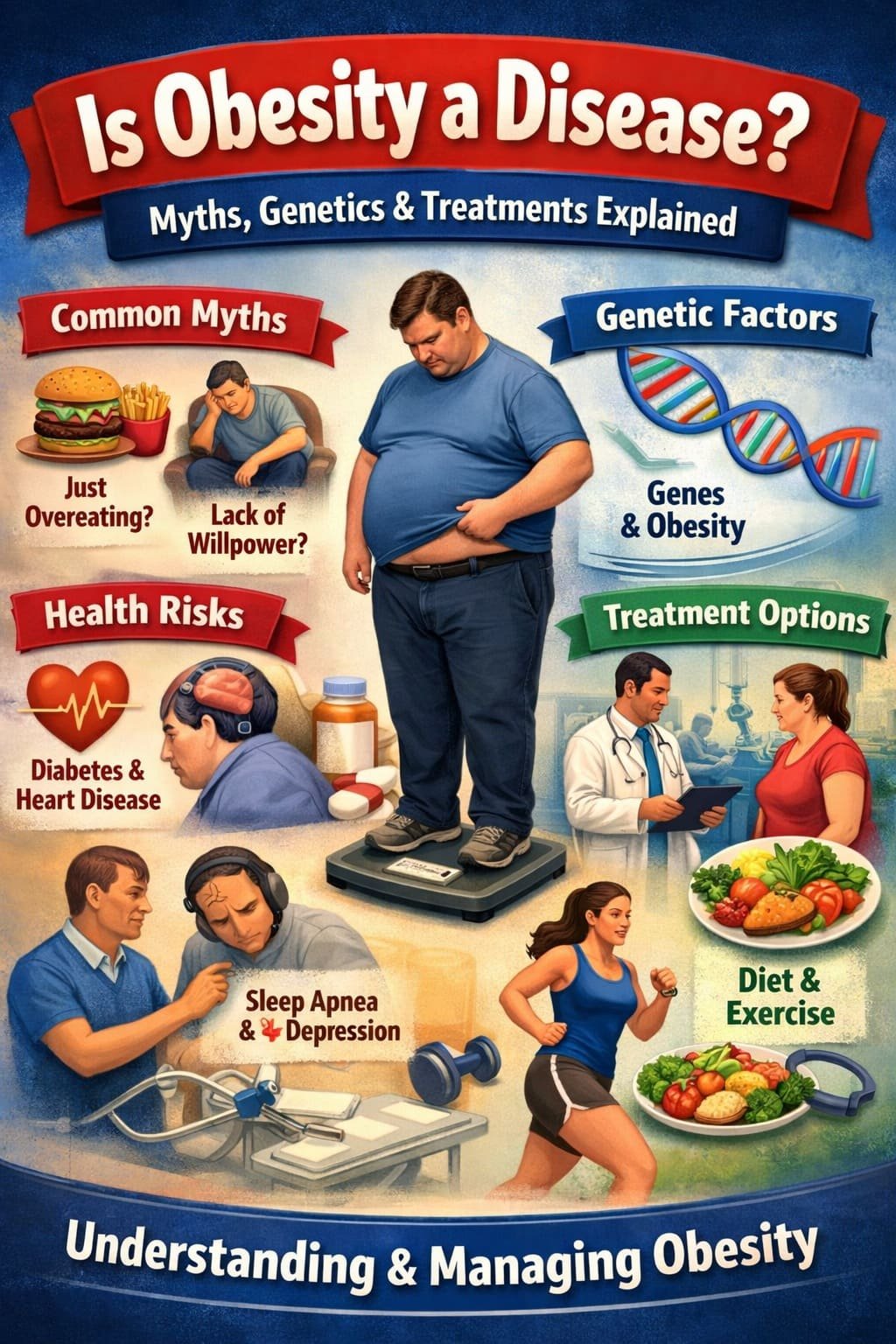
Is Obesity a Disease? Myths, Genetics, and Effective Treatment Options Explained

Discover the truth about obesity, including whether it is a disease, how genetics influence weight, common misconceptions, health risks, and proven treatment strategies.

Information
28. Feb 2026
51 views
Is Obesity a Disease? Myths, Genetics, and Effective Treatment Options Explained


Obesity has become one of the most discussed health concerns worldwide. Despite widespread awareness, many myths and misunderstandings still surround the condition. Some people view obesity simply as a result of overeating, while others recognize it as a complex medical issue involving biology, environment, and lifestyle.

Understanding what obesity really is — and what it is not — is essential for prevention, treatment, and reducing stigma.

What Is Obesity?

Obesity is a medical condition characterized by excessive body fat accumulation that increases the risk of health problems. It is commonly measured using the Body Mass Index (BMI):

  • Overweight: BMI 25–29.9
  • Obesity: BMI 30 or higher

However, BMI is only a screening tool. Doctors may also evaluate waist circumference, body fat distribution, and metabolic health.

Is Obesity a Disease?

Yes. Major medical organizations, including the World Health Organization and the American Medical Association, classify obesity as a chronic disease.

Why Obesity Is Considered a Disease

1. It involves complex biological processes.

2. It disrupts normal body functions and metabolism.

3. It increases the risk of serious conditions such as:

  • Type 2 diabetes
  • Heart disease
  • Stroke
  • Certain cancers
  • Sleep apnea

4. It often requires long-term medical management.

Recognizing obesity as a disease helps shift the focus from blame to treatment and prevention.

Common Misconceptions About Obesity

Myth 1: Obesity is caused only by overeating

Reality: Diet plays a role, but hormones, metabolism, medications, sleep, stress, and genetics also contribute.

Myth 2: People with obesity are lazy

Reality: Many individuals struggle with metabolic and hormonal factors that make weight loss difficult.

Myth 3: Weight loss is simply about willpower

Reality: The body adapts to weight loss by slowing metabolism and increasing hunger hormones.

Myth 4: Obesity only affects appearance

Reality: It significantly increases health risks and reduces quality of life.

Myth 5: Crash diets are effective solutions

Reality: Rapid weight loss often leads to muscle loss and weight regain.

Is Obesity Genetic?

Genetics can play a significant role in obesity.

How Genes Influence Weight

  • Affect appetite regulation
  • Influence fat storage and metabolism
  • Determine how the body uses energy
  • Impact hunger and fullness hormones

Studies suggest genetics may account for 40–70% of obesity risk.

However, genetics do not guarantee obesity. Lifestyle and environment strongly influence whether genetic tendencies lead to weight gain.

Environmental Factors That Interact With Genetics

  • High-calorie processed foods
  • Sedentary lifestyle
  • Stress and sleep deprivation
  • Urban living and limited physical activity

Health Risks Linked to Obesity

Obesity increases the risk of numerous chronic conditions:

  • Type 2 diabetes
  • High blood pressure
  • Heart disease
  • Joint problems
  • Fatty liver disease
  • Infertility
  • Depression and anxiety

Early intervention can significantly reduce these risks.

How to Treat Obesity

Treatment involves a comprehensive and sustainable approach rather than quick fixes.

1. Nutrition Improvements

Focus on long-term healthy eating habits:

  • Increase vegetables, fruits, and fiber
  • Choose lean proteins
  • Limit processed foods and sugary drinks
  • Practice portion control

2. Physical Activity

Aim for at least 150 minutes of moderate exercise weekly:

  • Walking
  • Cycling
  • Swimming
  • Strength training

Regular movement improves metabolism and heart health.

3. Behavioral Changes

  • Improve sleep quality
  • Manage stress
  • Avoid emotional eating triggers
  • Track food and activity habits

4. Medical Treatment

Doctors may recommend medications for individuals with obesity-related health risks. Some newer treatments target appetite and metabolism pathways and are developed by pharmaceutical companies including Eli Lilly and Company.

Medication is typically prescribed alongside lifestyle changes.

5. Surgical Options

For severe obesity (BMI ≥ 40 or ≥ 35 with health complications), bariatric surgery may be considered:

  • Gastric bypass
  • Sleeve gastrectomy

These procedures help regulate appetite hormones and improve metabolic health.

Preventing Obesity

Prevention strategies include:

  • Encouraging active lifestyles from childhood
  • Reducing consumption of ultra-processed foods
  • Promoting adequate sleep and stress management
  • Building environments that support physical activity

Final Thoughts

Obesity is far more complex than many people assume. It is a chronic disease influenced by genetics, environment, metabolism, and lifestyle factors. Understanding the truth behind obesity helps eliminate stigma and encourages effective treatment.

With the right combination of medical guidance, healthy habits, and long-term commitment, obesity can be managed — and overall health can be significantly improved.

FAQs

Q1: Is obesity officially considered a disease?

Yes, major medical organizations classify obesity as a chronic disease because it affects body functions and increases the risk of serious health conditions.

Q2: Can genetics really cause obesity?

Genetics can increase the likelihood of weight gain by influencing appetite, metabolism, and fat storage, but lifestyle and environment also play major roles.

Q3: Is obesity caused only by overeating?

No, obesity results from multiple factors including hormones, genetics, sleep, stress, medications, and physical inactivity.

Q4: What is the safest way to treat obesity?

The safest approach combines healthy eating, regular physical activity, behavioral changes, and medical guidance when necessary.

Q5: When should someone seek medical help for obesity?

Medical advice is recommended if BMI is 30 or higher, weight affects daily life, or obesity-related health problems develop.

Disclaimer: This article is for informational purposes only and should not be considered medical advice. Consult a qualified healthcare professional for diagnosis, treatment, or personalized health guidance.

The information in this article is for general reference only. Product details, pricing, and availability may change over time, and we can’t guarantee everything is 100% accurate. Some content may be created with the help of AI tools like ChatGPT. Please check the official website or seller before making a purchase. Some articles may contain affiliate links, and we may earn a small commission at no extra cost to you.

To know more about our platform, visit our About Us page.


Image Disclaimer: Product images are used for reference and review purposes only. All trademarks, logos, and images belong to their respective brands or Amazon sellers.

Follow on LinkedIn

Comments

No comments has been added on this post

Add new comment

You must be logged in to add new comment. Log in
Rishabh Sinha
Check Information about technical products, Books, latest launched products and more.
Information, Tech News
Categories
Review
Check all Products Review.
Gaming Blog
Game Reviews, Information and More.
Learn
Learn Anything
Factory Reset
How to Hard or Factory Reset?
Osclass Solution
Find Best answer here for your Osclass website.
Information
Check full Information about Electronic Items. Latest Mobile launch Date. Latest Laptop Processor, Laptop Driver, Fridge, Top Brand Television.
Pets Blog
Check Details About All Pets like Dog, Cat, Fish, Rabbits and More. Pet Care Solution, Pet life Spam Information
Lately commented
This is a great resource for dog lovers looking for inspiring and humoro... ·
Top 50 Dog Quotes for Social Media: ...
This is a helpful resource for pet owners who are concerned about their ... ·
Why my dogs eat grass? When To Be Wo...
Thank you for creating this valuable resource on plant toxicity in dogs.... ·
What Plants Are Toxic to Dogs: A Com...
This article offers valuable insights into potential causes and treatmen... ·
What to Do if Your Dog Is Rubbing It...
Thank you for creating this comprehensive guide. It's very helpful! ·
50 Essential Digital Marketing FAQs ...
Great job! This is really well done. ·
Top 10 Data Analytics Courses Instit...
Thanks for the tips on choosing the best earbuds for workouts. ·
How to Choose the Best Wireless Earb...
Excellent post. I am facing a few of these issues as well.. ·
Non-Health Reasons Your Cat Has Stop...