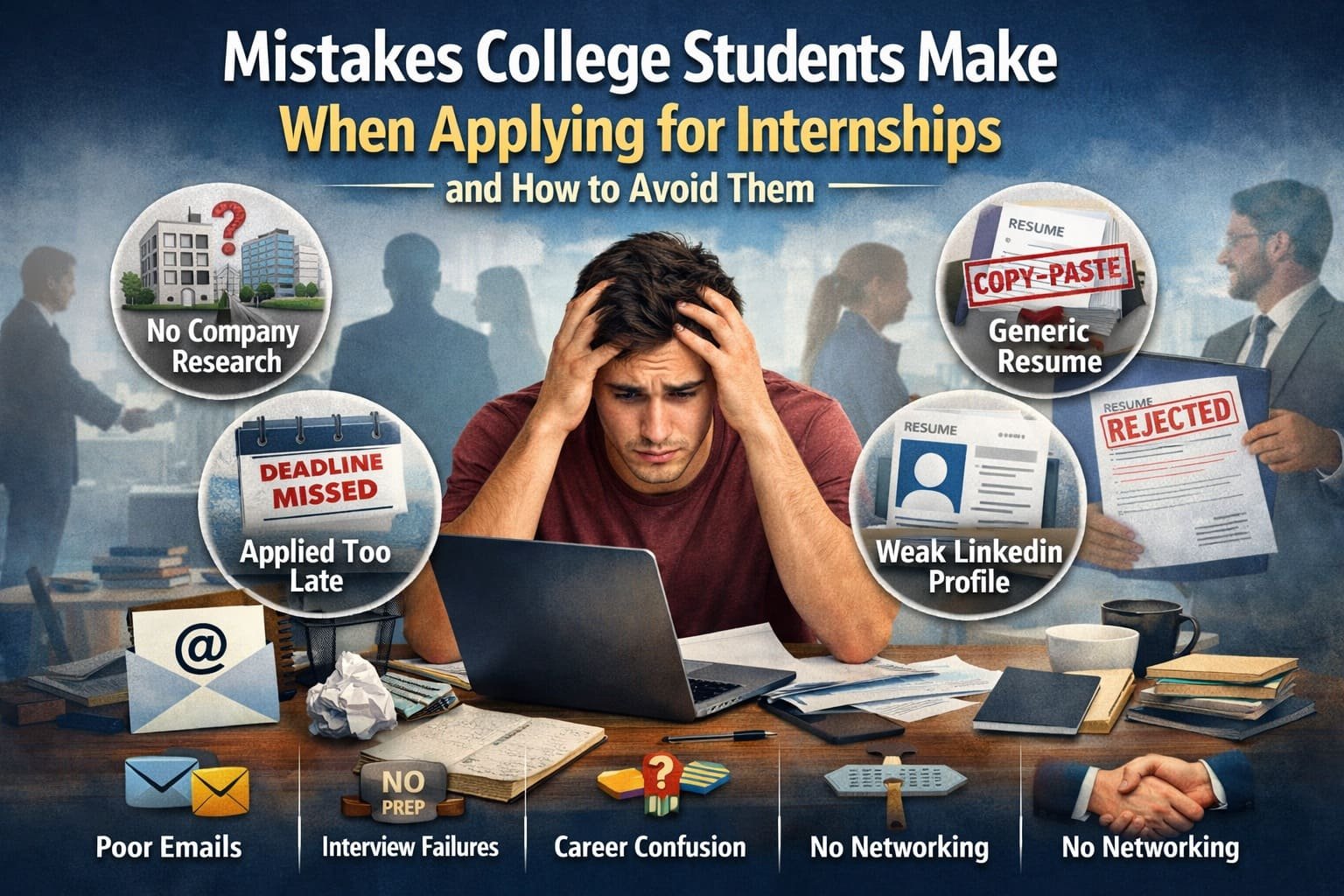
Internships are often the first real step from classroom learning to professional experience. They help students build practical skills, expand networks, and sometimes even secure full-time job offers before graduation. However, many college students unknowingly make mistakes during the application process that reduce their chances of getting selected.
The competition for internships—especially in fields like technology, marketing, finance, and media—is intense. Recruiters often review hundreds of applications for a single role. Even small errors can cause your application to be overlooked.
Here are the most common mistakes college students make when applying for internships—and practical ways to avoid them.
One of the biggest mistakes students make is sending applications without understanding the company. They apply simply because the role matches their major or because the company is popular.
Recruiters can quickly tell when a candidate hasn’t done basic research. Generic answers during interviews or cover letters that sound copied make a poor impression.
How to avoid this mistake:
When you show genuine interest, you stand out immediately.
Many students create one resume and use it for every internship application. While this saves time, it significantly reduces effectiveness.
Different roles require different skills. A marketing internship values communication and creativity, while a software internship focuses on technical expertise.
How to avoid this mistake:
A targeted resume increases your chances of passing initial screening systems and grabbing attention.
Some students skip the cover letter entirely, assuming recruiters won’t read it. Others write a generic one and attach it to every application.
A strong cover letter gives context to your resume. It explains your motivation and demonstrates communication skills.
How to avoid this mistake:
Think of the cover letter as your opportunity to speak directly to the recruiter.
Internship deadlines can close quickly, especially for well-known companies. Many students wait until the last minute or start searching only after exams are over.
By then, positions may already be filled.
How to avoid this mistake:
Early applications often get more attention because recruiters review them before they are overwhelmed with submissions.
In today’s hiring process, recruiters frequently check LinkedIn profiles before shortlisting candidates. An incomplete or unprofessional profile can hurt your chances.
Some common issues include:
How to avoid this mistake:
A polished LinkedIn profile strengthens your personal brand.
Many students rely only on online applications. While job portals are useful, networking often leads to better results.
Internships are frequently filled through referrals or internal recommendations.
How to avoid this mistake:
Networking builds relationships, and relationships create opportunities.
Getting an interview is a big achievement—but some students assume that their academic performance alone is enough.
Common interview mistakes include:
How to avoid this mistake:
Preparation shows professionalism and seriousness.
Many students believe they lack experience and therefore hesitate to apply. They forget that academic projects, freelance work, volunteering, and college activities count as valuable experience.
Recruiters understand that interns are learners.
How to avoid this mistake:
Show what you can do—not just what you have studied.
When applying directly through email, some students use unprofessional addresses or poorly written messages.
Common mistakes include:
How to avoid this mistake:
Small details can leave a lasting impression.
Rejection is common in competitive internship applications. Some students take it personally and stop applying after a few unsuccessful attempts.
This limits their opportunities.
How to avoid this mistake:
Persistence often makes the difference between success and missed opportunities.
Another common mistake is applying randomly to every available internship without considering long-term goals.
This can lead to irrelevant experiences and confusion later.
How to avoid this mistake:
Clarity leads to better decisions and stronger applications.
Students often focus only on technical skills and grades. However, communication, teamwork, adaptability, and problem-solving are equally important.
Employers look for interns who can work well in teams and adapt quickly.
How to avoid this mistake:
Soft skills can sometimes outweigh technical knowledge at the internship level.
Applying for internships is more than just submitting resumes. It requires strategy, preparation, research, and persistence. The mistakes mentioned above are common—but they are completely avoidable with the right approach.
If you treat internship applications professionally, tailor each application thoughtfully, and continuously improve your profile, your chances of success increase significantly.
Remember, internships are not just about getting selected—they are about preparing yourself for the professional world. Every application, interview, and even rejection teaches you something valuable.
Start early, stay focused, and approach the process with confidence. The right opportunity will come to those who prepare for it seriously.
Image Credits: Created by ChatGPT using DALL·E (OpenAI).
To know more about our platform, visit our About Us page.


Comments