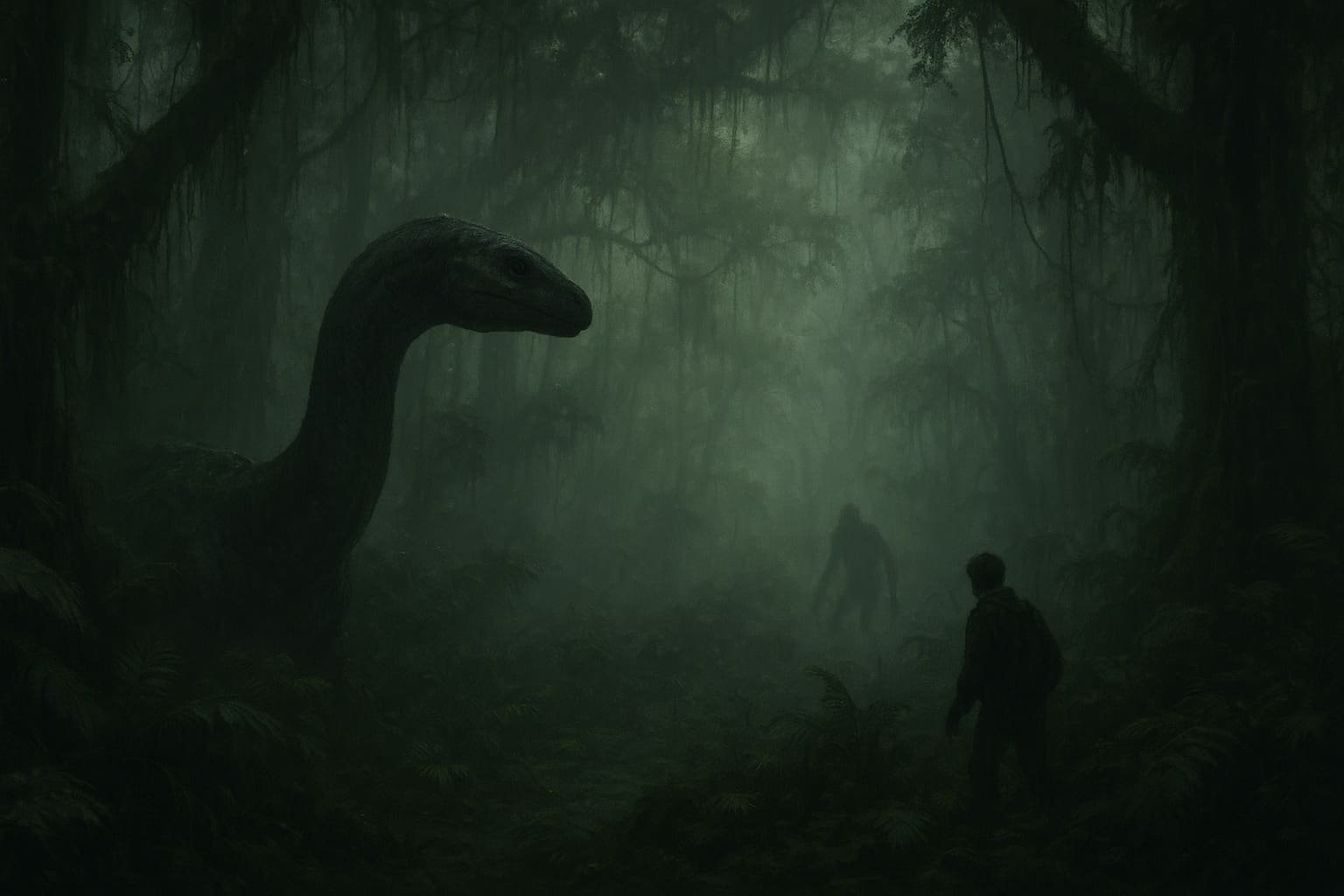
Deep within Central Africa lies one of the most hostile, least-explored, and most awe-inspiring places on Earth—the Congo jungle. Vast, ancient, and shrouded in fearsome lore, this rainforest is more than just a stretch of wilderness. It is a world of its own, a place where scientific certainty blurs into myth, and where generations of explorers, tribes, and researchers have been humbled by the unknown forces harbored in its dense green walls.
The Congo Basin covers over 1.3 million square miles, making it the second-largest tropical rainforest in the world after the Amazon. But unlike the Amazon, a significant part of the Congo remains uncharted—an environment where thick vegetation blocks sunlight, where rivers twist for thousands of kilometers, and where entire ecosystems flourish without human interference.
To walk through the Congo jungle is to feel the weight of millions of years of evolution pressing down around you. The soundscape alone is overwhelming: insects buzzing in waves, distant roars from unseen creatures, branches snapping under unseen movements. This sensory overload is not chaotic—it is a reminder that here, humans are outsiders.
Stories from indigenous tribes paint the Congo as a place where spirits, monsters, and unknown beings roam freely.
Among the most chilling legends is that of Mokele-Mbembe, a creature described as massive, reptilian, with a long neck and a temperament deadly enough to overturn boats. Some locals speak of it as a myth; others swear they have seen it in remote swamps. While scientists dismiss it as folklore, numerous expeditions have failed to disprove its existence definitively.
Then there are tales of ghost forests, areas where wildlife disappears without explanation, and where hunters refuse to enter. Some believe these zones are home to ancient curses. Others think they are habitats of aggressive animal species yet to be documented.
While myths account for part of the terror, the real dangers of the Congo jungle are often far more terrifying.
The Congo is home to some of the most dangerous animals on Earth:
For researchers who enter this region, every step must be calculated.
With its humidity, dense canopy, and stagnant water channels, the Congo is a breeding ground for deadly diseases.
From malaria to novel viral pathogens still unidentified, the forest carries microbial mysteries that even modern medicine struggles to understand.
Rivers with invisible whirlpools, quicksand-like mud, and endless swamp regions make navigation nearly impossible. Many explorers have vanished without a trace—lost to the environment rather than any creature.
Throughout the 19th and 20th centuries, the Congo became a graveyard for ambitious explorers. Journals were found abandoned, canoes floating with no occupants, and camps left eerily untouched.
One of the most chilling historical mysteries is the disappearance of entire groups of colonial explorers whose last notes described “strange cries at night,” “tracks of massive animals,” and “unidentifiable shadows moving between the trees.”
To this day, the Congo’s missing persons cases continue to grow—many involving experienced guides and biologists who understood the terrain well.
Scientists estimate that over 50% of the Congo’s species remain undiscovered, largely because the terrain is nearly impossible to penetrate with traditional research equipment. There are entire regions where even satellite imaging fails due to canopy density.
What lives beneath these untouched zones?
Giant reptiles? Unknown primate species? Microorganisms that could rewrite evolutionary history?
The truth is simple: The Congo jungle remains the last frontier of Earth's mysteries.
The terror of the Congo is not just in its dangers; it is in its unpredictability.
No matter how much is studied, no matter how much technology advances, the rainforest refuses to give up its secrets easily. It is one of the few places left on the planet where genuine mystery survives—where ancient myths still feel possible and where the line between reality and legend is razor thin.
For some, this makes the Congo a place of nightmares.
For others, it is the ultimate symbol of Earth’s wild, untamed soul.
Image Credits: Created by ChatGPT using DALL·E (OpenAI).
To know more about our platform, visit our About Us page.


Comments