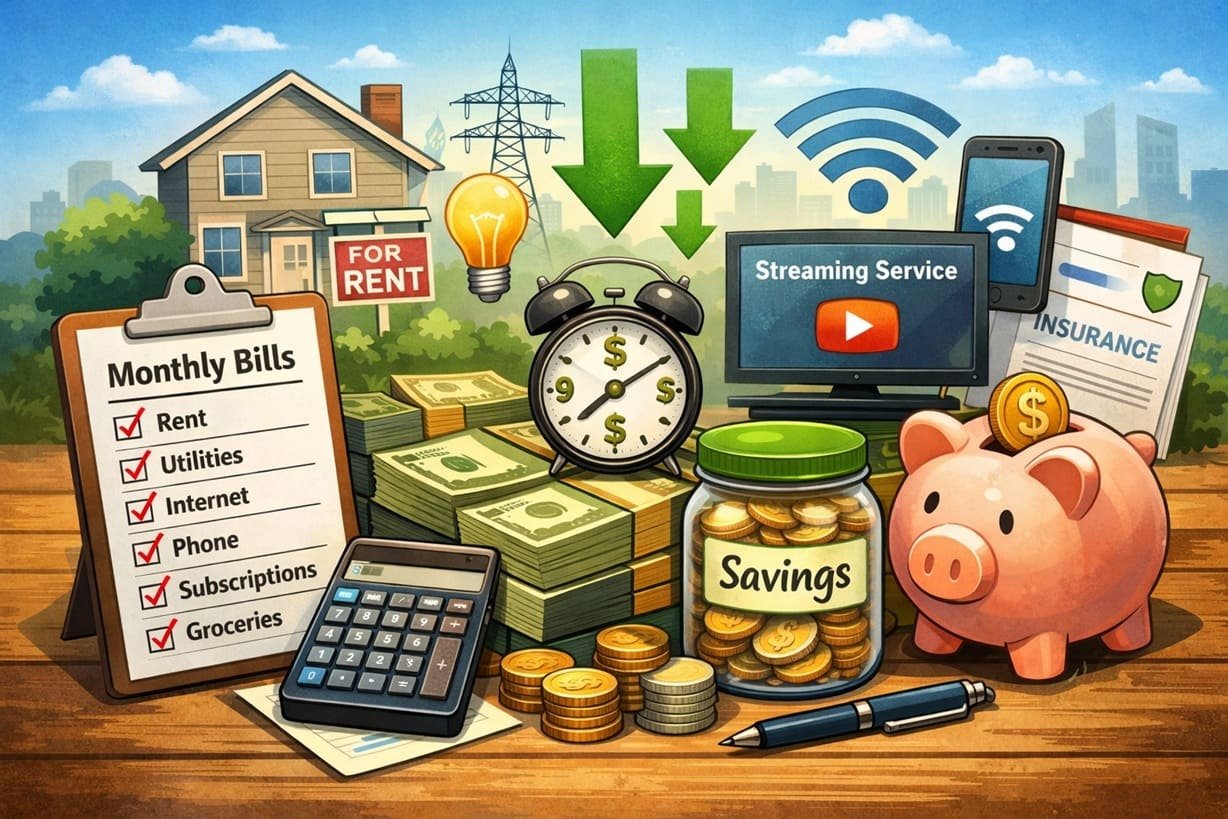
Monthly bills can quietly drain your income if you’re not paying attention. From rent and utilities to phone plans and subscriptions, small charges add up faster than most people realize. The good news is that saving money on monthly bills in the US doesn’t require extreme budgeting or major lifestyle changes. With a few smart adjustments, you can cut costs and keep more of your hard-earned money.
This guide breaks down simple, realistic ways to lower your monthly expenses without sacrificing comfort.
Before you can save money, you need to understand your current spending.
Go through the last two or three months of bank and credit card statements. List out recurring bills such as rent, electricity, internet, phone, streaming services, and insurance. Many people discover they are paying for services they barely use.
Once you see the full picture, it becomes much easier to spot areas where you can cut back.
Housing is usually the biggest monthly expense in the US.
If you rent, consider negotiating your lease when it’s time to renew. Long-term tenants with a good payment history often have room to ask for a lower rent or added benefits like free parking or reduced fees.
If moving is an option, comparing neighborhoods or downsizing slightly can result in significant monthly savings.
Homeowners can explore refinancing options when interest rates are favorable, which may reduce monthly mortgage payments.
Utility bills can fluctuate a lot depending on habits and seasons.
Simple changes like turning off lights, unplugging unused electronics, and using energy-efficient LED bulbs can lower electricity costs. Adjusting your thermostat by just a few degrees can also make a noticeable difference.
Using cold water for laundry, fixing small leaks, and being mindful of water usage can reduce water and heating bills over time.
Many Americans overpay for internet and mobile plans.
Start by reviewing your current plan usage. If you’re paying for unlimited data but rarely use it, switching to a lower-tier plan can save money each month.
Calling your internet or phone provider and asking for promotions or loyalty discounts can often lead to instant savings. Comparing plans from other providers may also give you leverage to negotiate better rates.
Subscription services are convenient, but they add up quickly.
Streaming platforms, music apps, fitness memberships, and premium software often go unused. Cancel services you no longer need or rotate subscriptions by keeping only one or two at a time.
Many companies also offer discounted plans if you choose annual billing or student and family packages.
Insurance is another major monthly expense that people rarely review.
Shopping around for car, renters, or home insurance once a year can lead to better deals. Bundling multiple policies with the same provider often results in discounts.
Maintaining a good credit score and a clean driving record can also help lower insurance premiums over time.
Groceries may not feel like a bill, but they are a regular monthly expense.
Planning meals ahead, buying store brands, and using cashback apps can reduce grocery costs. Avoid shopping when hungry, as it often leads to impulse purchases.
Cooking at home more often instead of ordering takeout can save hundreds of dollars each month.
Late fees can easily be avoided.
Setting up automatic payments ensures bills are paid on time and helps protect your credit score. Budgeting apps and expense trackers can also alert you when spending gets out of control.
Seeing your expenses in real time makes it easier to stay disciplined.
Prices change, promotions expire, and new plans become available.
Make it a habit to review your bills every few months. Even small reductions across multiple bills can add up to meaningful savings over the year.
Saving money on monthly bills in the US isn’t about cutting out everything you enjoy. It’s about being intentional with your spending and making smarter choices. By tracking expenses, negotiating where possible, reducing waste, and reviewing your bills regularly, you can free up money for savings, emergencies, or future goals.
Small changes today can lead to long-term financial stability and peace of mind.
Image Credits: Created by ChatGPT using DALL·E (OpenAI).
To know more about our platform, visit our About Us page.


Comments