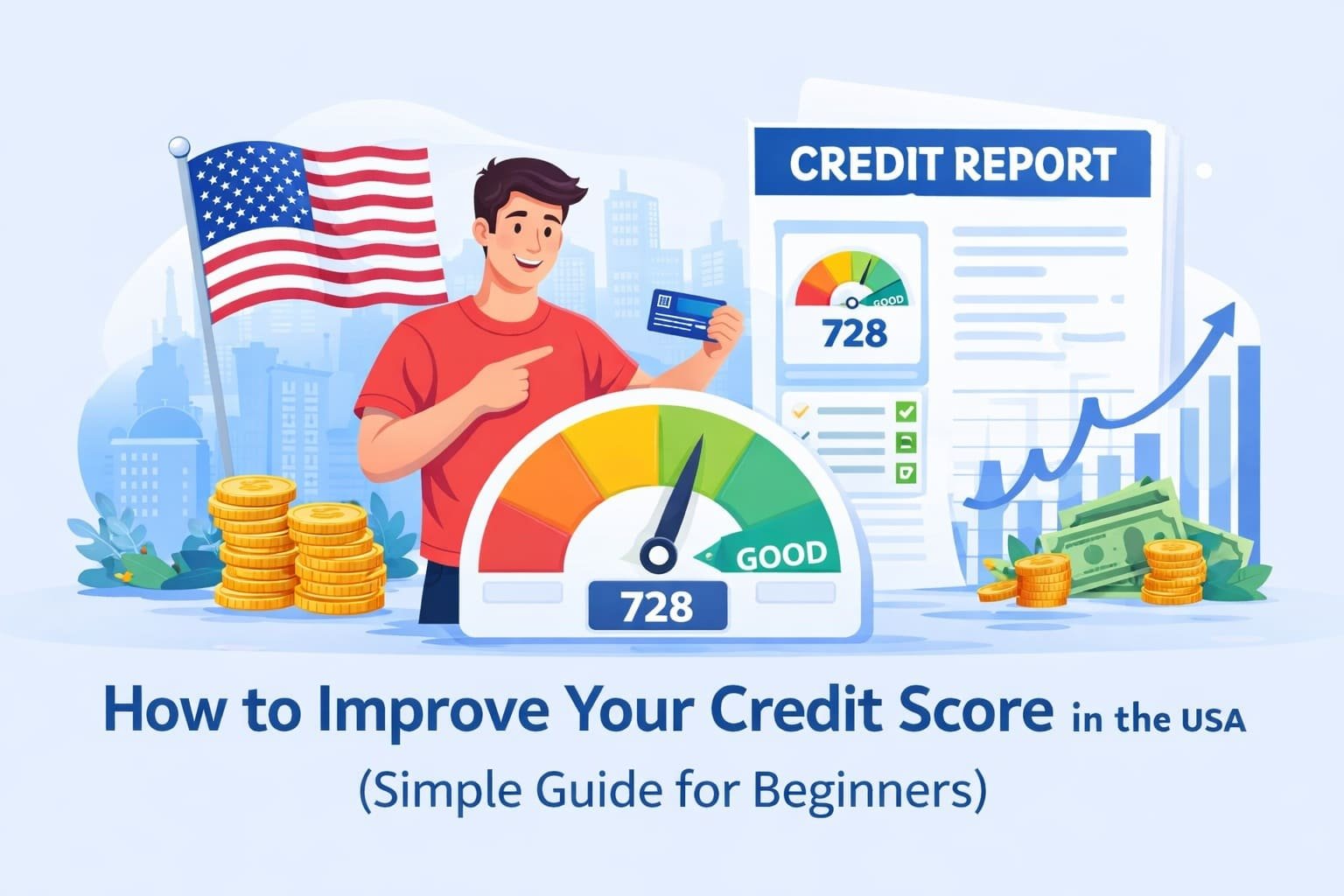
Your credit score plays a major role in your financial life in the United States. Whether you want to get approved for a credit card, buy a car, rent an apartment, or qualify for a home loan, your credit score can directly affect your chances and the interest rates you receive.
If you are new to credit or struggling with a low score, don’t worry. Improving your credit score is possible with consistent habits and the right knowledge. This guide breaks everything down in a simple, beginner-friendly way.
A credit score is a three-digit number that represents how trustworthy you are as a borrower. In the USA, most lenders use FICO or VantageScore models, which typically range from 300 to 850.
A higher score shows lenders that you pay bills on time and manage debt responsibly. A lower score suggests higher risk, which can lead to loan rejections or higher interest rates.
Understanding what affects your credit score is the first step toward improving it.
This is the most important factor. Paying bills late, missing payments, or having accounts in collections can seriously hurt your score.
This refers to how much of your available credit you are using. Using too much of your credit limit can lower your score.
Older accounts help your score. The longer your credit history, the better it looks to lenders.
Having different types of credit, such as credit cards, auto loans, or student loans, can help improve your score.
Applying for too much credit in a short time can temporarily reduce your score.
Before making changes, review your credit report to understand where you stand. In the USA, you are entitled to free credit reports from the major credit bureaus.
Look for:
Disputing errors can sometimes lead to quick improvements in your score.
On-time payments are the foundation of a good credit score. Even one missed payment can stay on your report for years.
Simple tips:
Consistency matters more than perfection.
High credit card balances can significantly lower your score.
If your credit card limit is $1,000, try to keep your balance under $300.
Paying only the minimum keeps balances high and increases interest costs.
Reducing balances shows lenders that you manage credit responsibly.
Each credit application triggers a hard inquiry, which can slightly lower your score.
Apply for new credit only when necessary, especially if you are actively trying to improve your score.
Closing old credit cards may seem like a good idea, but it can reduce your credit history length and available credit.
If an account has no annual fee, keeping it open can help your score over time.
If you are new to credit, start small and build gradually.
These cards require a refundable deposit and are easier to get approved for.
Being added as an authorized user on a responsible person’s credit card can help build your credit history.
These small loans are designed to help beginners establish a positive payment record.
Credit score improvement doesn’t happen overnight. Positive habits take time to reflect on your credit report.
Small, consistent actions like paying on time and keeping balances low can lead to noticeable improvements within a few months.
Improving your credit score in the USA is not about shortcuts or quick fixes. It’s about building smart financial habits and sticking with them. By understanding how credit works, paying bills on time, managing balances wisely, and avoiding unnecessary debt, you can steadily improve your score and unlock better financial opportunities.
A good credit score is a long-term asset. Start today, stay disciplined, and your future self will thank you.
Q1: What is a good credit score in the USA?
A good credit score generally falls between 670 and 739. Scores above this range can help you qualify for better interest rates and loan offers.
Q2: How long does it take to improve a credit score?
Small improvements can appear within a few months, but significant changes usually take six months to a year of consistent, positive habits.
Q3: Does paying bills early improve your credit score?
Paying early does not boost your score directly, but paying on time every month is one of the most important factors in improving your credit score.
Q4: Can beginners improve their credit score without a credit card?
Yes, beginners can build credit using secured credit cards, credit builder loans, or by becoming an authorized user on someone else’s account.
Q5: Does checking your credit score lower it?
No, checking your own credit score is considered a soft inquiry and does not affect your score at all.
Image Credits: Created by ChatGPT using DALL·E (OpenAI).
To know more about our platform, visit our About Us page.


Comments