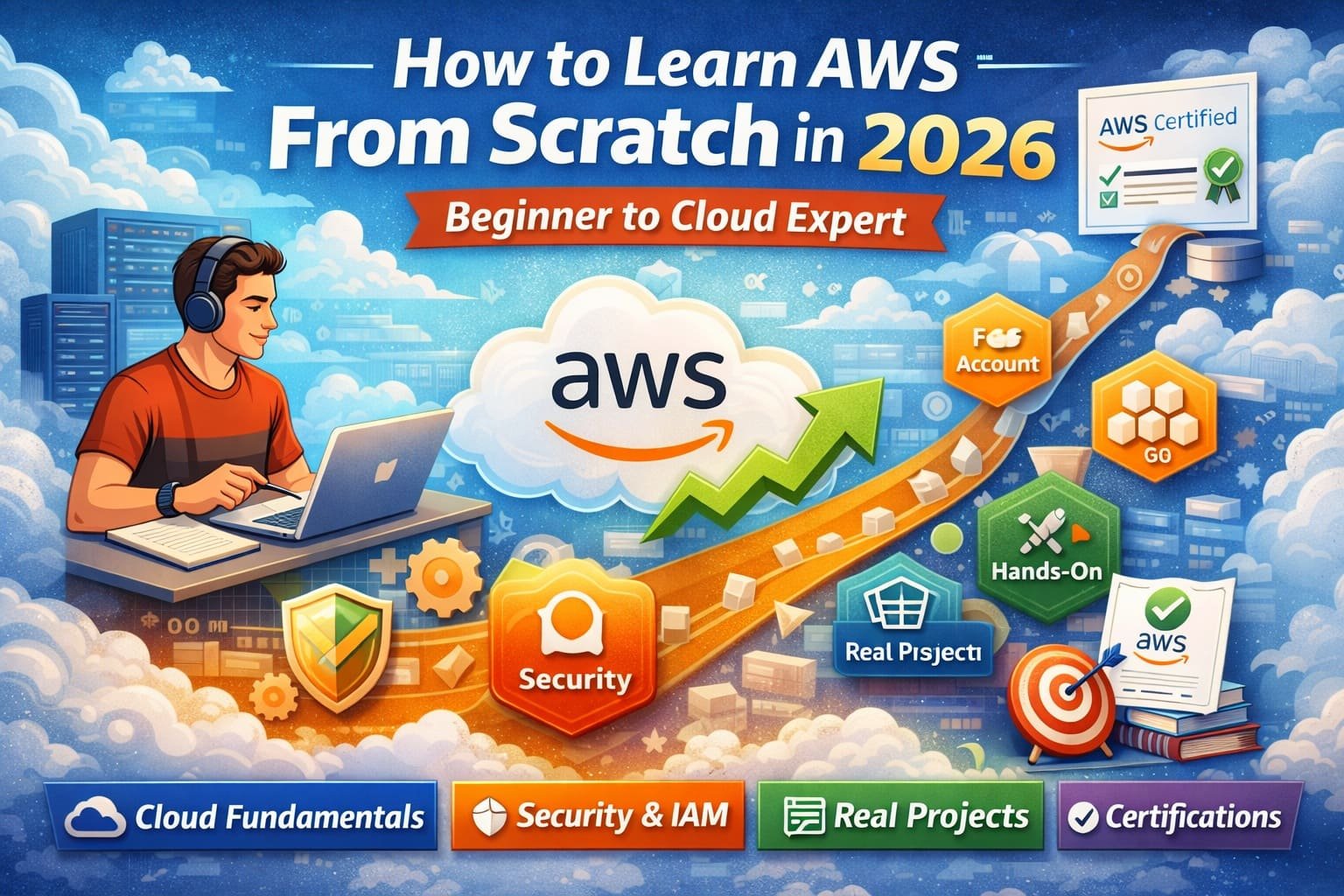
Cloud computing is no longer an optional skill—it has become a core requirement for IT professionals, developers, and even business owners. Among all cloud platforms, Amazon Web Services (AWS) continues to dominate the global market. If you are planning to enter the cloud domain, learning AWS from scratch in 2026 is one of the smartest career decisions you can make.
The good news is that you don’t need a technical background or prior cloud experience to get started. With the right learning path and consistent practice, anyone can master AWS step by step.
AWS is used by startups, enterprises, governments, and global brands to run applications, store data, and scale infrastructure. As businesses continue moving to the cloud, demand for AWS-skilled professionals remains strong.
Learning AWS opens doors to roles such as cloud engineer, solutions architect, DevOps engineer, system administrator, and cloud consultant. It also adds value to developers, data analysts, and cybersecurity professionals.
Before starting AWS, it helps to understand a few foundational concepts:
You don’t need to master these topics, but having basic clarity will make AWS concepts easier to understand.
The best way to learn AWS is by using it. Amazon offers a Free Tier that allows beginners to explore many services at no cost for a limited usage period.
With a free account, you can practice launching virtual servers, configuring storage, and working with databases. Hands-on experience is critical when learning AWS from scratch.
Instead of trying to learn everything at once, focus on the most important services first:
These services form the foundation of AWS and are used in almost every real-world project.
A clear roadmap saves time and prevents confusion. A good AWS learning path in 2026 looks like this:
Avoid random tutorials. Instead, follow a well-organized course or learning plan designed for beginners.
Theory alone is not enough. To truly learn AWS, you should build small projects such as:
Projects help you understand how AWS works in real scenarios and improve confidence.
Security is a major part of AWS. Beginners often ignore it, but understanding IAM roles, permissions, and best practices early will set you apart.
Learning how to control access, secure data, and follow AWS security standards is essential for real-world cloud jobs.
AWS certifications are not mandatory, but they help validate your skills. For beginners, the AWS Certified Cloud Practitioner is a good starting point. After that, many learners move to AWS Solutions Architect – Associate.
Certification preparation also strengthens your conceptual understanding and improves job prospects.
AWS provides excellent free and paid learning materials, including documentation, tutorials, and labs. These resources are regularly updated and align with industry standards.
Combining official resources with practical courses and projects creates a strong learning foundation.
AWS introduces new services and features every year. In 2026, staying updated is part of learning. Follow AWS blogs, announcements, and community forums to keep your knowledge fresh.
Cloud learning is continuous, and adaptability is a key skill.
Learning AWS from scratch in 2026 is completely achievable with the right mindset and roadmap. Start with the basics, focus on core services, practice consistently, and build real projects. You don’t need to rush—steady progress matters more than speed.
Whether your goal is a cloud job, career switch, or skill upgrade, AWS offers long-term opportunities. With dedication and hands-on learning, AWS can become one of the most valuable skills in your professional journey.
Image Credits: Created by ChatGPT using DALL·E (OpenAI).
To know more about our platform, visit our About Us page.


Comments