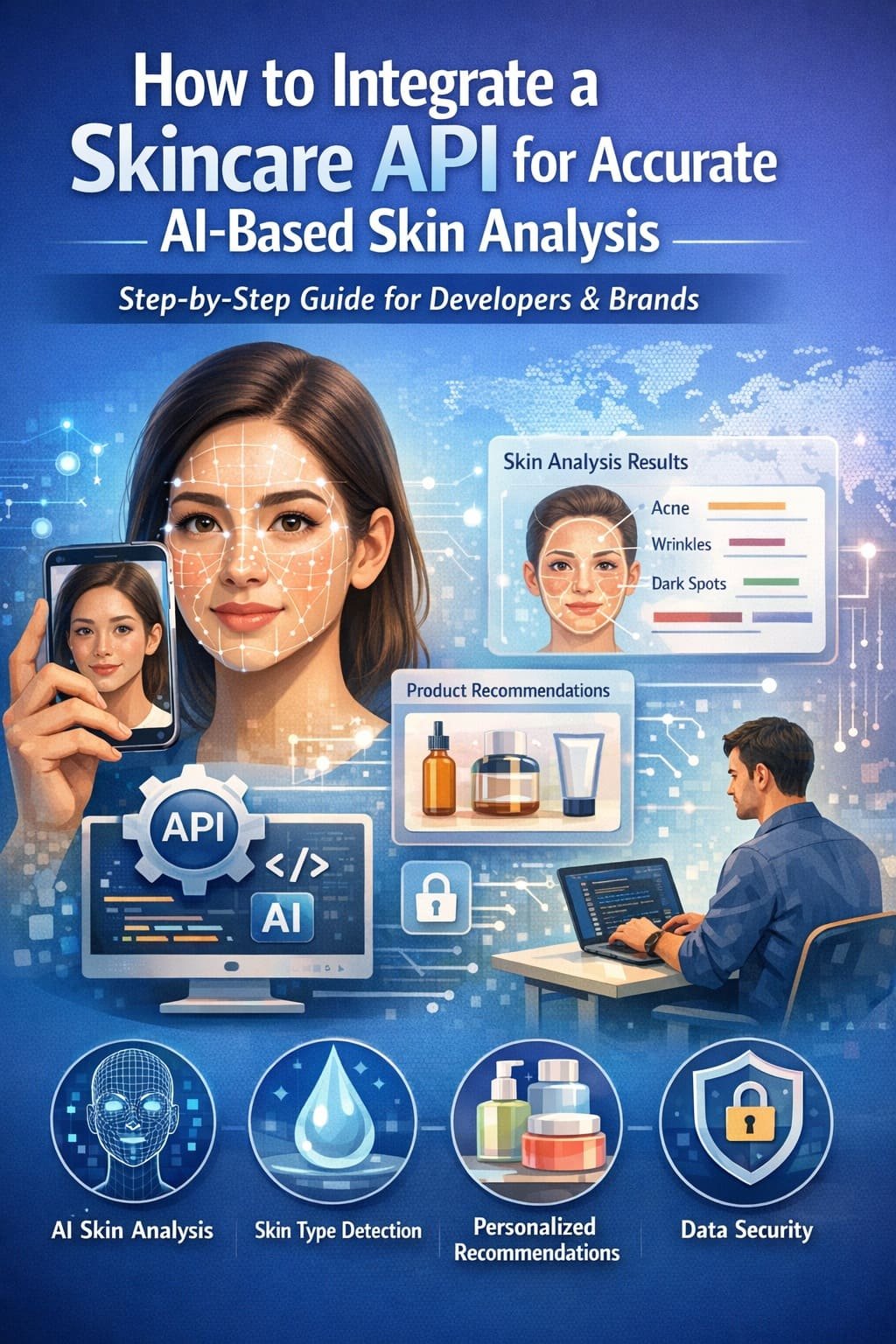
The skincare industry is rapidly embracing technology, and one of the biggest innovations is AI-powered skincare analysis. From detecting acne and pigmentation to recommending personalized skincare routines, Skincare APIs make it possible to deliver smart, data-driven experiences to users.
If you are a developer, startup founder, or beauty brand owner looking to integrate a Skincare API into your website or mobile app, this guide will walk you through the complete process in a clear and practical way.
A Skincare API is a web-based service that allows applications to analyze skin conditions using images, questionnaires, or biometric data. These APIs typically use artificial intelligence and machine learning models to assess issues such as acne, wrinkles, dark spots, oiliness, dryness, and overall skin health.
Skincare APIs are widely used in beauty apps, dermatology platforms, e-commerce websites, and virtual skincare consultation tools.
Integrating a Skincare API adds significant value to your platform by offering personalized insights and recommendations.
Most professional Skincare APIs provide a range of advanced features.
Analyzes common skin concerns such as acne, wrinkles, pigmentation, redness, pores, and fine lines.
Determines whether the skin is oily, dry, combination, sensitive, or normal.
Uses facial images to generate accurate skincare insights in seconds.
Suggests skincare routines and products based on skin analysis results.
Allows users to track skin improvements over time.
Below is a practical and developer-friendly approach to integrating a Skincare API into your platform.
Start by selecting a reliable API provider that matches your business goals.
What to Look For
Popular providers usually offer sandbox access or free trials, which are ideal for testing before deployment.
Once you select a provider, sign up on their developer portal.
You will receive:
These credentials authenticate your application when making API calls.
Prepare your backend or frontend environment depending on your integration approach.
Supported Technologies
Most Skincare APIs support:
Ensure your application can handle HTTP requests and JSON responses.
Skincare APIs usually require user input in one of two ways.
Image-Based Input
Users upload or capture facial images using their device camera.
Questionnaire-Based Input
Users answer questions related to skin type, concerns, age, and lifestyle.
Make sure to include user consent before collecting any personal or image data.
Use the API endpoint provided by the service to send skin data.
Typical Request Includes
The API processes the data and returns a structured response.
The API response usually contains skin scores, detected conditions, and recommendations.
Best Practices
This step is critical for user trust and engagement.
Enhance the experience by linking analysis results to skincare routines or products.
Recommendation Ideas
This is especially useful for e-commerce and affiliate-based platforms.
Skincare data is sensitive and must be handled responsibly.
Security Measures
Strong privacy practices increase user confidence in your platform.
Before going live, test the API integration in different scenarios.
Testing Checklist
Testing ensures accurate results and a smooth user experience.
After successful testing, deploy the integration to production.
Ongoing Monitoring
Continuous optimization helps maintain quality and scalability.
Skincare APIs can be used across multiple platforms.
Popular Use Cases
Integrating a Skincare API for skincare analysis is a powerful way to combine technology with beauty. When implemented correctly, it enables personalized experiences, builds customer trust, and creates new revenue opportunities.
By choosing the right API provider, following best development practices, and prioritizing data privacy, you can create a smart skincare solution that feels professional, reliable, and user-focused. As AI continues to evolve, Skincare APIs will play an even bigger role in shaping the future of digital skincare experiences.
Q1: What is a Skincare API?
A Skincare API is a technology solution that uses AI and machine learning to analyze skin conditions through images or user data and provide personalized skincare insights.
Q2: How does a Skincare API analyze skin?
It analyzes facial images or questionnaire data using AI models to detect skin concerns like acne, wrinkles, pigmentation, oiliness, and dryness.
Q3: Do I need technical knowledge to integrate a Skincare API?
Basic development knowledge is helpful, but most Skincare API providers offer clear documentation, sample code, and SDKs to simplify integration.
Q4: Is user data safe when using a Skincare API?
Yes, reputable Skincare APIs use encryption, secure servers, and comply with data protection laws such as GDPR to keep user data safe.
Q5: Who can benefit from integrating a Skincare API?
Beauty brands, skincare startups, e-commerce platforms, dermatology services, and mobile app developers can all benefit from Skincare API integration.
To know more about our platform, visit our About Us page.


Comments