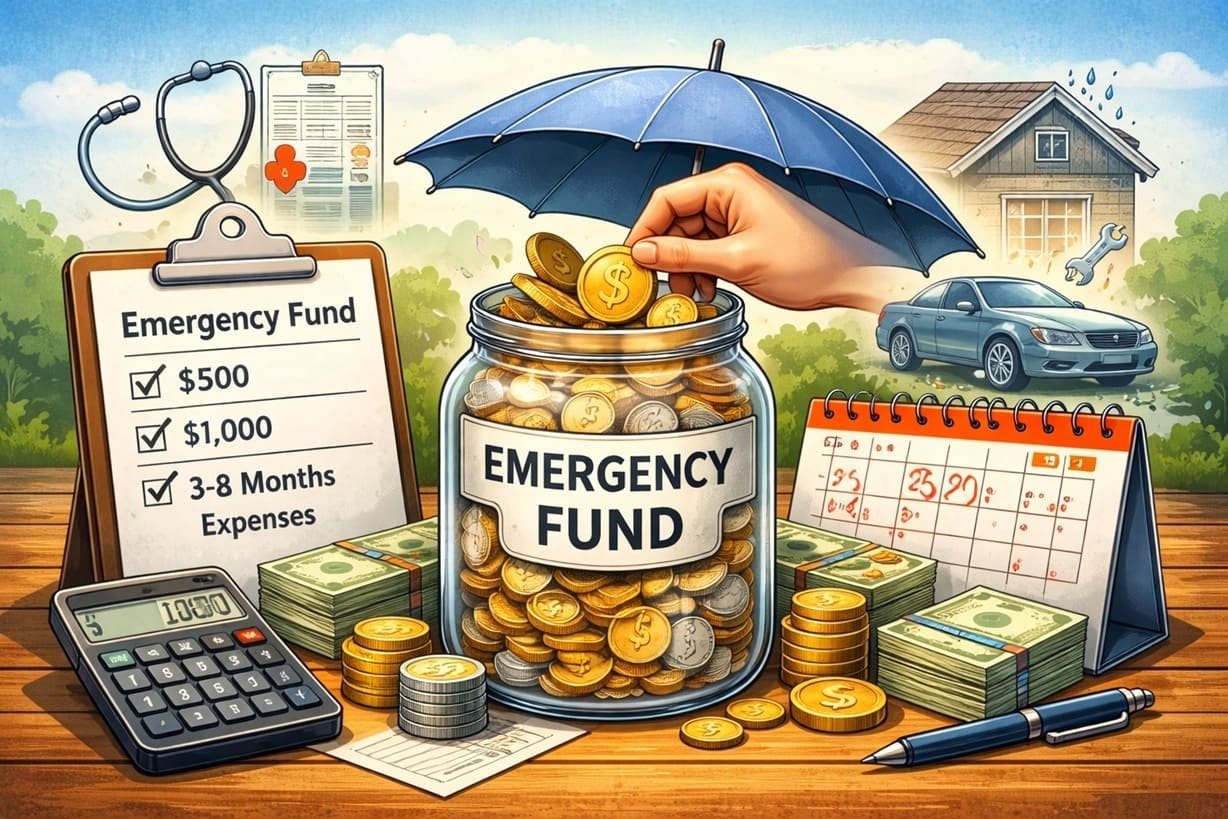
Life in the USA can be expensive, and unexpected expenses often show up when you least expect them. A medical bill, car repair, job loss, or sudden home expense can quickly throw your finances off balance. This is where an emergency fund becomes essential.
An emergency fund acts as a financial safety net. It gives you peace of mind and protects you from relying on credit cards or loans when emergencies happen. Building one may feel challenging at first, but with the right approach, it’s absolutely achievable.
An emergency fund is money set aside specifically for unexpected expenses. It is not meant for vacations, shopping, or regular monthly bills.
In the USA, where healthcare costs and living expenses can be high, having an emergency fund helps you:
Simply put, it gives you control when life becomes unpredictable.
A common recommendation is to save three to six months of essential living expenses.
If your monthly necessities include rent, utilities, groceries, insurance, and transportation, calculate the total and use that number as your base.
Beginners don’t need to reach this goal immediately. Starting with a smaller target, such as $500 or $1,000, can already make a big difference.
One of the biggest mistakes people make is waiting until they can save a large amount. The key is to start now, even if it’s a small amount.
Saving $25 or $50 per paycheck adds up over time. Consistency matters far more than the amount you start with.
Treat your emergency fund like a non-negotiable bill you pay to yourself every month.
Keeping your emergency fund separate from your regular checking account helps avoid temptation.
A high-yield savings account is a good option because it keeps your money accessible while earning a little interest. Avoid investing this money, as emergency funds should be safe and easy to access when needed.
Automation makes saving easier and stress-free.
Set up automatic transfers from your checking account to your emergency savings account. This removes the need to remember and helps build the habit naturally.
Even small automated transfers can grow into a solid fund over time.
Review your monthly spending to find areas where you can save more.
Cancel unused subscriptions, reduce dining out, or switch to a more affordable phone or internet plan. Redirect those savings straight into your emergency fund.
Temporary sacrifices now can prevent major financial stress later.
Bonuses, tax refunds, side hustle income, or cash gifts can significantly speed up your progress.
Instead of spending all extra money, consider putting a portion or all of it into your emergency fund. This can help you reach your goal faster without affecting your regular budget.
An emergency fund is meant for true emergencies only.
Examples include:
Using it wisely ensures it’s available when you truly need it.
If you dip into your emergency fund, make rebuilding it a priority.
Adjust your budget temporarily and resume automatic savings until the fund is restored. This keeps your financial safety net strong and ready for the future.
Building an emergency fund in the USA is one of the most important steps toward financial security. It doesn’t require a high income or perfect budgeting—just patience, consistency, and smart choices.
Start small, stay committed, and remember that every dollar saved brings you closer to financial peace of mind. An emergency fund isn’t just money in the bank; it’s confidence in your ability to handle whatever life throws your way.
Image Credits: Created by ChatGPT using DALL·E (OpenAI).
To know more about our platform, visit our About Us page.


Comments