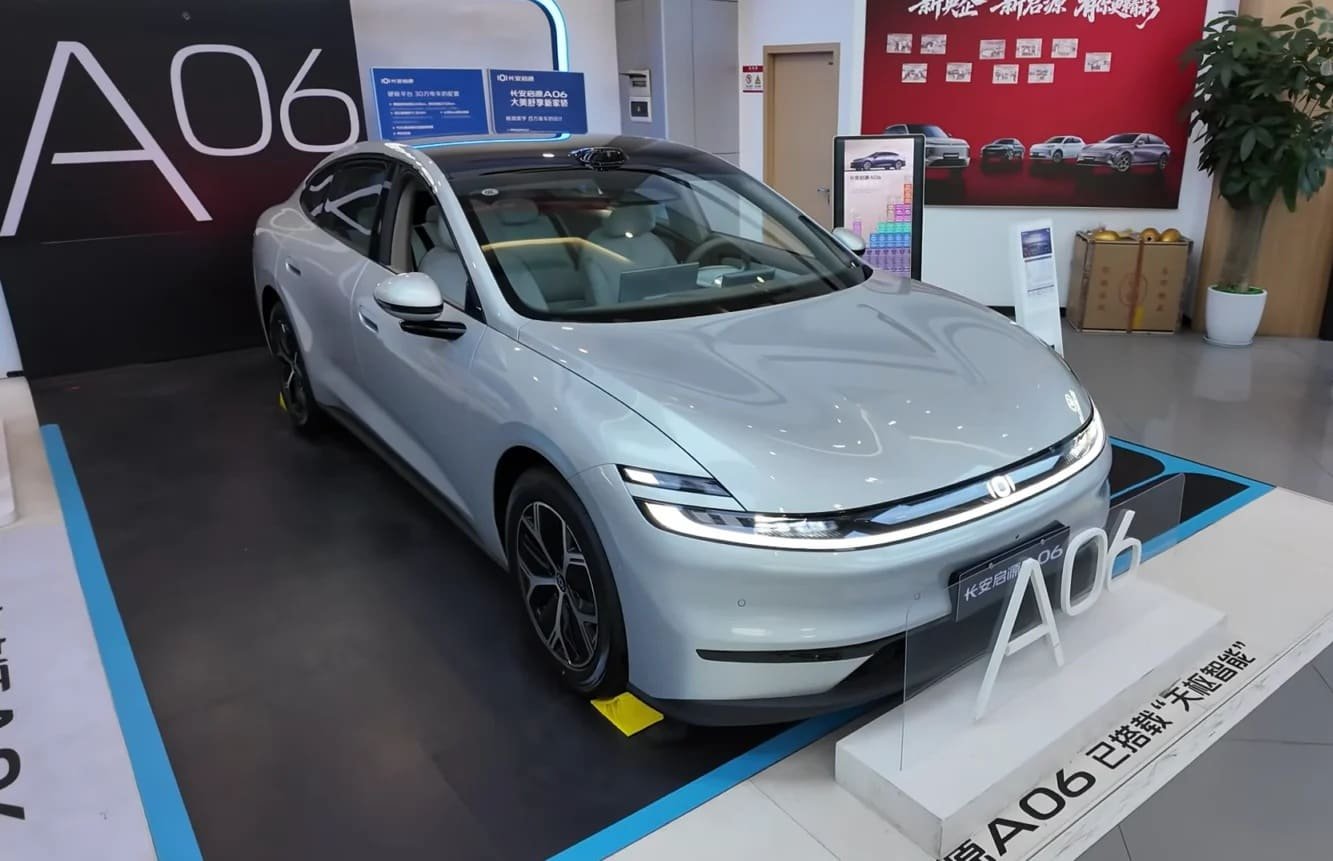
The electric vehicle industry has quietly crossed a major technological milestone. For the first time, a mass-produced passenger EV is set to hit the roads with a sodium-ion battery, a technology that has been discussed for years but never deployed at this scale. The breakthrough comes from Changan Automobile, in partnership with CATL, and the vehicle leading this shift is the Changan Nevo A06.
What makes this development especially important is not just the battery chemistry, but how it performs in extreme cold—an area where most EVs struggle the most.
Cold temperatures have long been one of the biggest weaknesses of EVs. Battery efficiency drops, charging slows, and usable range can fall sharply. The Nevo A06 challenges this reality in a significant way.
According to Changan and CATL, the sodium-ion battery was able to charge normally at around -30°C and continued operating at temperatures as low as -50°C. Even more impressive, at -40°C, the battery reportedly retained over 90% of its original capacity.
This level of performance is extremely difficult to achieve with conventional lithium iron phosphate (LFP) batteries, which tend to suffer major capacity and power losses in deep sub-zero conditions.
The Nevo A06 is equipped with a 45 kWh CATL Naxtra sodium-ion battery pack. On China’s CLTC test cycle, the vehicle delivers a claimed driving range of just over 400 km.
On paper, this puts it in the same territory as entry-level LFP-based electric cars. The difference lies in how consistently that range can be accessed in cold climates. CATL states that the sodium-ion pack can deliver several times more power than comparable LFP batteries at sub-zero temperatures, helping preserve acceleration, heating performance, and overall drivability without severe range loss.
Sodium-ion technology offers several advantages beyond cold-weather performance.
One of the biggest is resource availability. Sodium is far more abundant and cheaper than lithium, making it less vulnerable to global supply-chain disruptions. This could help stabilize battery costs over time, especially as EV demand continues to grow worldwide.
Safety is another key benefit. CATL claims the Naxtra sodium-ion cells are highly resistant to thermal runaway and have passed extreme abuse tests without catching fire. This added safety margin could make sodium-ion batteries especially attractive for urban vehicles and mass-market EVs.
CATL describes this development as the start of a “dual-chemistry” era for electric vehicles. Instead of one battery type dominating every segment, sodium-ion and lithium-ion batteries are expected to coexist, each serving different climates, cost targets, and usage scenarios.
In this vision, sodium-ion batteries could be ideal for colder regions and affordable EVs, while lithium-based chemistries continue to power long-range and high-performance models.
The Changan Nevo A06 is expected to launch in China around mid-2026, with sodium-ion battery packs gradually expanding across Changan’s broader vehicle lineup. For now, this rollout remains China-focused, and there is no confirmation of international availability.
Even so, the significance of this launch goes far beyond one market. It sends a clear signal that sodium-ion batteries have moved out of the laboratory and into real production vehicles.
The Changan Nevo A06 is more than just another electric car launch—it marks a turning point for battery technology. With the ability to retain over 90% charge at -40°C, operate in extreme cold, and still deliver more than 400 km of range, sodium-ion batteries are proving they can solve some of the most persistent problems facing EVs today.
While lithium-based batteries are not going away anytime soon, this development shows that the future of electric mobility may not depend on a single chemistry. For cold regions especially, sodium-ion EVs could soon offer a practical, safer, and more resilient alternative—without the usual compromises.
To know more about our platform, visit our About Us page.


Comments