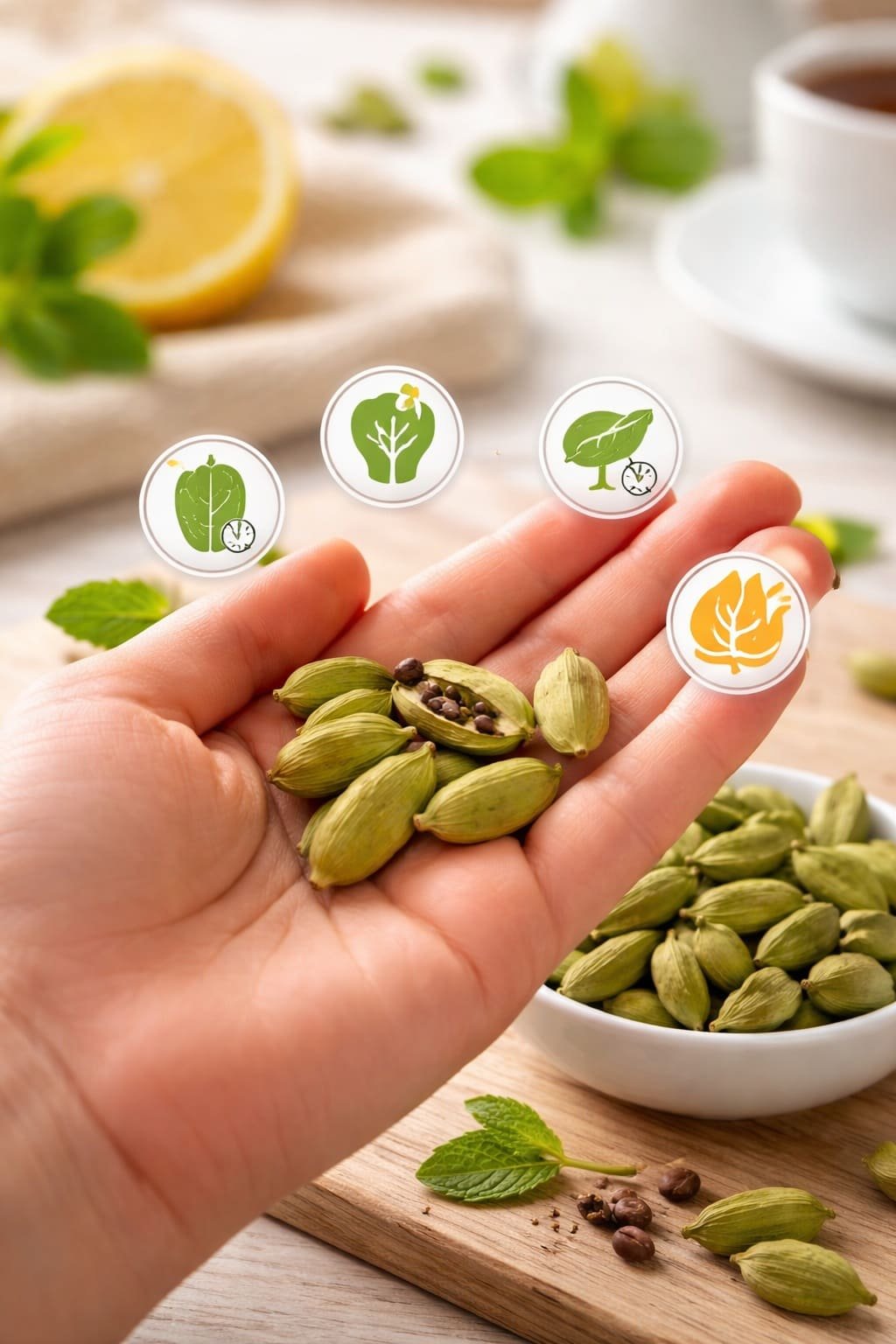
Cardamom, often called the “queen of spices,” has been used for centuries in traditional medicine and culinary practices. Known for its unique aroma and flavor, cardamom is not only a delicious addition to food but also offers several health benefits, especially when consumed after meals. Chewing cardamom after eating can aid digestion, freshen breath, and even provide long-term health benefits.
Cardamom contains compounds that stimulate digestive enzymes and bile production, which helps the body break down food efficiently. Chewing cardamom after meals can help:
This makes it particularly beneficial after heavy meals or spicy foods.
One of the most common uses of cardamom is as a natural breath freshener. Chewing a pod after meals can:
This makes cardamom a healthier alternative to sugar-based mints or gums.
Cardamom has antibacterial and anti-inflammatory properties. Chewing it can help:
Regular use may contribute to better dental health over time.
Some studies suggest that cardamom can help regulate blood sugar levels. Chewing cardamom after meals may:
This makes it a useful spice for managing long-term metabolic health.
Cardamom is known to stimulate circulation and metabolism. Chewing it may:
Its antioxidant properties also help fight oxidative stress in the body.
For those who experience mild acidity or heartburn, cardamom can be helpful. Chewing it after meals can:
It acts as a gentle, natural remedy compared to over-the-counter antacids.
Cardamom contains compounds that have a calming effect on the nervous system. Chewing cardamom after meals can:
This is an added benefit beyond its digestive and oral health properties.
Chewing cardamom after meals is a simple, natural habit that can improve digestion, freshen breath, support oral health, and offer long-term wellness benefits. While it is not a substitute for medical treatment, incorporating cardamom into your post-meal routine is a safe and effective way to enhance overall health. Small, consistent habits like this can make a big difference over time.
Cardamom is a small spice with surprisingly big benefits—making it a perfect companion to your meals.
Q1. Is it good to chew cardamom after meals?
Yes, chewing cardamom aids digestion, freshens breath, and supports overall health. It’s a safe natural habit.
Q2. How many cardamom pods should I chew daily?
Typically 1–2 pods after meals are sufficient to gain digestive and oral health benefits.
Q3. Can cardamom help with bad breath?
Yes, cardamom has antibacterial properties and a pleasant aroma that naturally freshens breath.
Q4. Does chewing cardamom aid digestion?
Absolutely, cardamom stimulates digestive enzymes, reduces bloating, and improves nutrient absorption.
Q5. Are there any side effects of chewing cardamom?
Cardamom is generally safe in small amounts. Excessive consumption may cause mild stomach upset in sensitive individuals.
Disclaimer: This article is for informational purposes only and is not a substitute for professional medical advice. Consult a healthcare provider for personal health concerns.
Image Credits: Created by ChatGPT using DALL·E (OpenAI).
To know more about our platform, visit our About Us page.


Comments