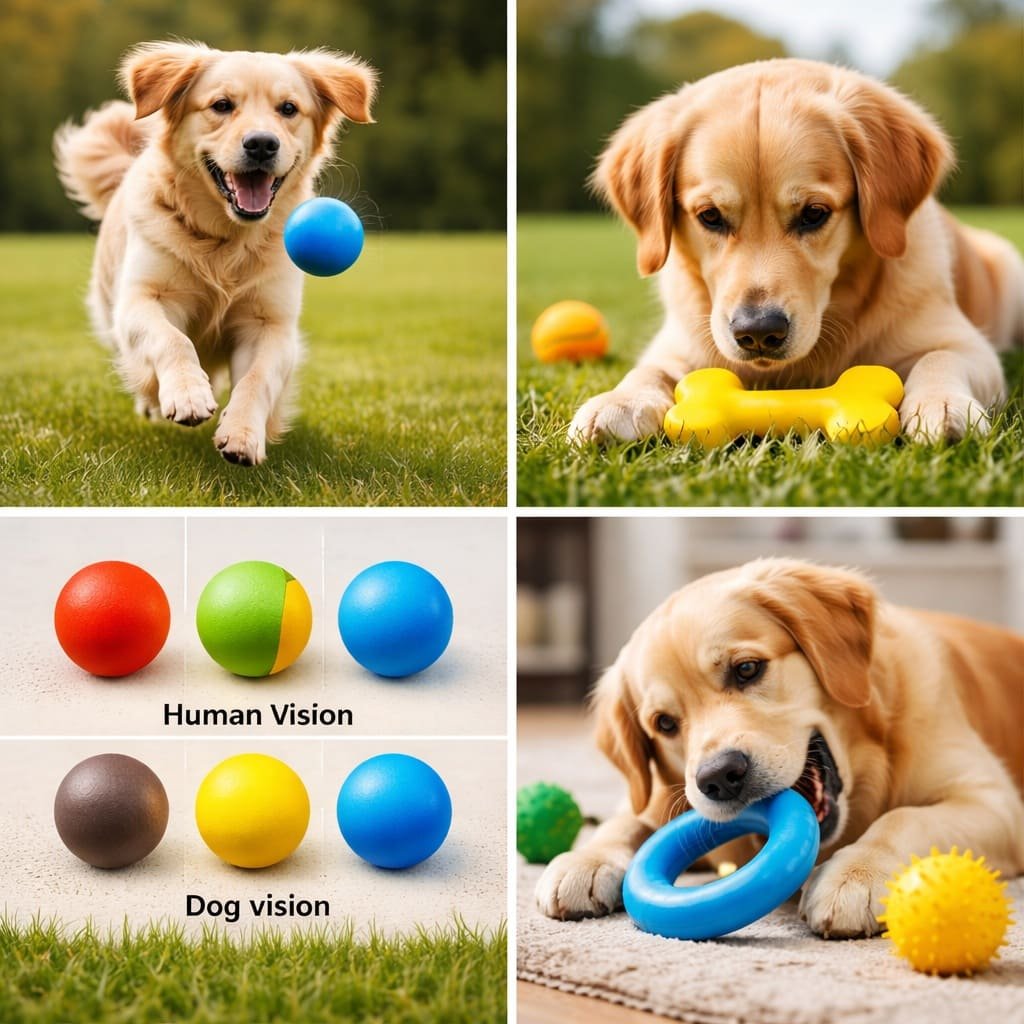
Many people believe dogs see the world only in black and white. This long-standing myth has been widely repeated, but modern science tells a very different story. Dogs do see colors — just not in the same vibrant spectrum that humans experience.
Understanding how dogs perceive color can help you choose better toys, design engaging environments, and improve training results.
Dogs are not color blind in the way humans once thought. Instead, they have dichromatic vision, meaning they see a limited range of colors compared to humans.
Humans have three types of color-detecting cells (cones) in the eye, while dogs have only two. This difference affects how dogs distinguish colors.
Humans see: red, green, blue, and everything in between
Dogs primarily see: blue and yellow shades
Colors outside this range appear muted or grayish.
Dogs see a color spectrum similar to a human with red-green color blindness.
Most visible colors to dogs:
Colors dogs struggle to distinguish:
This means a bright red toy on green grass may be difficult for your dog to spot.
The difference lies in the structure of the eye.
Dogs’ retinas contain:
This gives dogs advantages in low light and tracking movement, even though their color perception is reduced.
Color Range: Dogs see fewer colors, mainly blues and yellows.
Night Vision: Dogs see much better in dim lighting.
Motion Detection: Dogs detect moving objects faster and more accurately.
Sharpness: Dogs see less detail; what appears sharp to humans may look slightly blurred to dogs.
These differences reflect evolutionary needs — dogs rely more on movement and scent than color detail.
Choosing the right colors can make playtime more enjoyable and stimulating.
Recommended toy colors:
Less effective colors:
If you want your dog to easily find a toy outdoors, blue or yellow is the best choice.
Color awareness can improve training success.
Clear visibility helps dogs focus and respond faster.
Dogs don’t see in complete darkness, but they see far better in low light than humans. Their eyes contain a reflective layer called the tapetum lucidum, which enhances night vision by reflecting light through the retina.
This is why dogs’ eyes glow in the dark when light hits them.
Because dogs depend more on motion detection:
Movement combined with visible colors creates the best engagement.
Dogs experience the world in a unique way. While they don’t see the full rainbow spectrum that humans do, they perceive shades of blue and yellow clearly and rely heavily on motion and light sensitivity to understand their surroundings.
Knowing what colors dogs can see helps you choose better toys, design more effective training routines, and create a more engaging environment for your pet. By seeing the world through your dog’s eyes, you can make everyday activities more enjoyable and enriching for them.
Q1. Are dogs completely color blind?
No, dogs are not color blind. They see a limited range of colors, mainly blues and yellows.
Q2. What colors are easiest for dogs to see?
Dogs see blue and yellow most clearly, making these the best colors for toys and training tools.
Q3. Why can’t dogs see red and green well?
Dogs have fewer color-detecting cones in their eyes, making red and green appear dull or grayish.
Q4. Can dogs see better at night than humans?
Yes, dogs have superior low-light vision due to more rod cells and a reflective eye layer that enhances night visibility.
Q5. Does color matter when choosing dog toys?
Yes, blue and yellow toys are easier for dogs to see, especially outdoors, improving engagement during play.
Image Credits: Created by ChatGPT using DALL·E (OpenAI).
To know more about our platform, visit our About Us page.


Comments