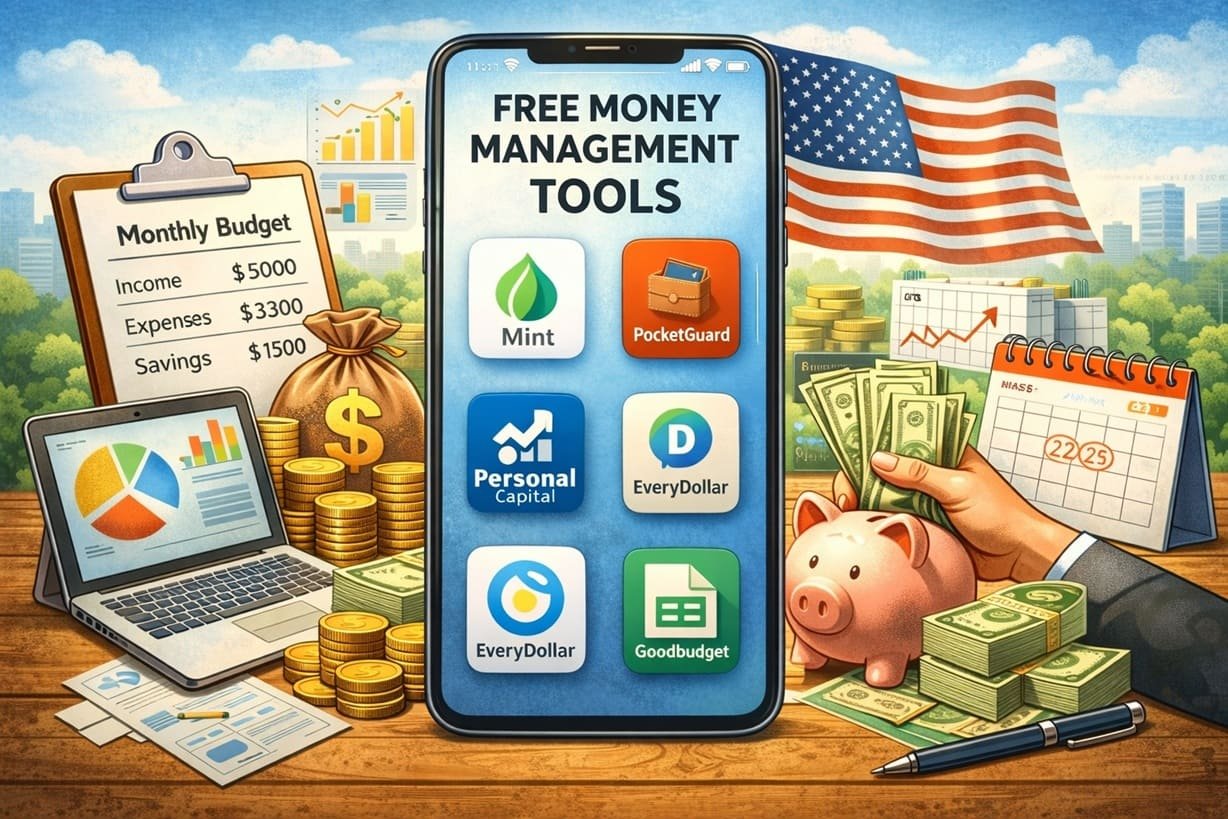
Managing money doesn’t have to be complicated or expensive. In the USA, there are many free tools that can help you track spending, create budgets, save more, and stay on top of your financial goals. Whether you’re trying to get out of debt, build savings, or simply understand where your money goes each month, the right tools can make a big difference.
This guide highlights some of the best free money management tools available in the US and explains how each one can help improve your financial habits.
Money management tools help bring clarity to your finances. Instead of guessing how much you spend or save, these tools give you real numbers and insights.
They can help you:
The best part is that many powerful tools are completely free.
Mint is one of the most popular free personal finance tools in the USA.
It allows you to link your bank accounts, credit cards, and loans in one place. Mint automatically categorizes transactions and shows where your money goes each month.
Key benefits include budget creation, bill reminders, and credit score monitoring. It’s ideal for beginners who want a simple overview of their finances.
Personal Capital, now known as Empower, is excellent for people who want both budgeting and long-term financial tracking.
The free tools help you track spending, net worth, and investments. It also offers retirement planning tools that show whether you’re on track for the future.
This tool is especially useful if you want a bigger picture of your financial health.
YNAB, short for You Need A Budget, focuses on proactive budgeting.
While it is a paid tool, it offers a free trial that many beginners use to learn strong budgeting habits. YNAB encourages users to give every dollar a purpose, which can help reduce overspending.
It’s great for people serious about gaining control over their finances.
EveryDollar offers a simple and clean budgeting experience.
The free version lets you create a monthly budget and manually track expenses. It follows a zero-based budgeting method, making it easier to plan where your money goes.
This tool works well for those who prefer hands-on budgeting without automatic bank syncing.
PocketGuard focuses on preventing overspending.
After connecting your accounts, it shows how much money you have left after covering bills and savings goals. This “safe-to-spend” feature helps users avoid going over budget.
It’s especially helpful for people who struggle with impulse spending.
Goodbudget uses the envelope budgeting method in a digital format.
You allocate money to different categories, or “envelopes,” and track spending manually. This approach helps build discipline and awareness around spending.
Goodbudget is ideal for families or couples who want to manage money together.
Sometimes the simplest tools are the most effective.
Using free spreadsheet templates allows full control over budgeting and expense tracking. Many free templates are available online, and they can be customized to match your financial goals.
Spreadsheets work best for people who like flexibility and detailed control.
The best money management tool depends on your personal style.
If you want automation and ease, Mint or PocketGuard may be ideal. If you prefer hands-on control, EveryDollar or spreadsheets may suit you better. For long-term planning, Personal Capital offers powerful insights.
Trying a few tools before settling on one can help you find the perfect fit.
Managing money in the USA doesn’t require expensive software or professional services. Free tools can provide powerful insights and help you develop healthier financial habits.
The key is consistency. Choose a tool you enjoy using, check it regularly, and adjust your budget as your life changes. With the right tool and mindset, managing your money becomes simpler, smarter, and far less stressful.
Disclaimer: This article is for informational purposes only and does not constitute financial advice. Always consider your personal situation before making financial decisions.
To know more about our platform, visit our About Us page.


Comments