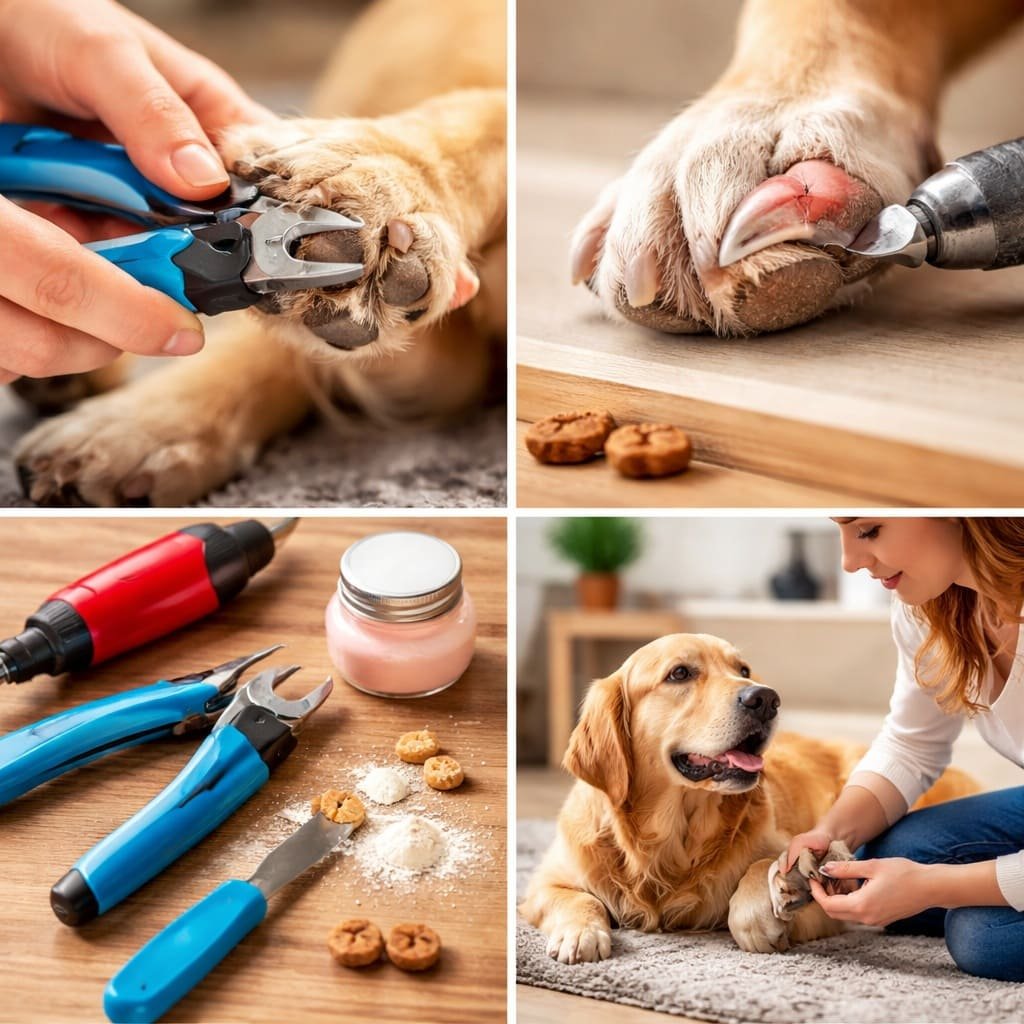
Keeping your dog’s nails trimmed is an essential part of grooming and overall health care. Overgrown nails can cause discomfort, affect posture, and even lead to joint stress over time. While many pet owners rely on groomers or veterinarians, trimming your dog’s nails at home can be safe, easy, and cost-effective when done correctly.
This guide explains everything you need to know — from understanding nail anatomy to calming nervous pets — so you can trim your dog’s nails with confidence.
Long nails do more than create a clicking sound on the floor. They can:
Regular trimming helps your dog walk naturally and prevents avoidable injuries.
The frequency depends on breed, activity level, and walking surfaces.
General guidelines:
If you hear nails clicking on the floor, it’s time for a trim.
Using the right tools makes the process safer and easier.
Essential tools:
Choose clippers designed specifically for dogs to ensure clean cuts.
Inside each nail is a sensitive blood vessel called the quick. Cutting into it causes bleeding and pain.
If unsure, trim small amounts at a time.
Choose a quiet space and ensure your dog is relaxed. Let them sniff the clippers before starting.
Support the paw and press lightly to extend the nail.
Cut only the tip of the nail at a slight angle. Avoid cutting too close to the quick.
Use a nail grinder or file to smooth sharp edges.
Give treats and praise after each paw to build positive associations.
Some dogs dislike paw handling. Patience and gradual training help.
Consistency builds trust and reduces fear over time.
Accidents can happen — don’t panic.
To stop bleeding:
Bleeding usually stops quickly and is rarely serious.
If trimming is stressful, consider:
Choose what keeps your dog calm and comfortable.
Watch for these indicators:
Routine checks help prevent painful overgrowth.
Trimming your dog’s nails may seem intimidating at first, but with the right tools, patience, and technique, it becomes a simple part of routine care. Regular nail maintenance improves comfort, supports healthy posture, and strengthens trust between you and your pet.
Start slowly, stay calm, and reward generously — your dog will learn that nail trimming is nothing to fear.
Q1. How do I know when my dog’s nails need trimming?
If you hear clicking sounds on hard floors or see nails touching the ground while standing, it’s time for a trim.
Q2. What happens if I accidentally cut the quick?
Apply styptic powder or cornstarch and gentle pressure. Bleeding usually stops quickly and is not serious.
Q3. How often should I trim my dog’s nails?
Most dogs need trimming every 3–6 weeks, depending on activity level and how fast the nails grow.
Q4. Can I use human nail clippers for my dog?
It’s safer to use dog-specific nail clippers because they are designed for thicker nails and provide better control.
Q5. What if my dog is scared of nail trimming?
Introduce paw handling slowly, use treats, trim one nail at a time, and create a calm environment to build trust.
Image Credits: Created by ChatGPT using DALL·E (OpenAI).
To know more about our platform, visit our About Us page.


Comments