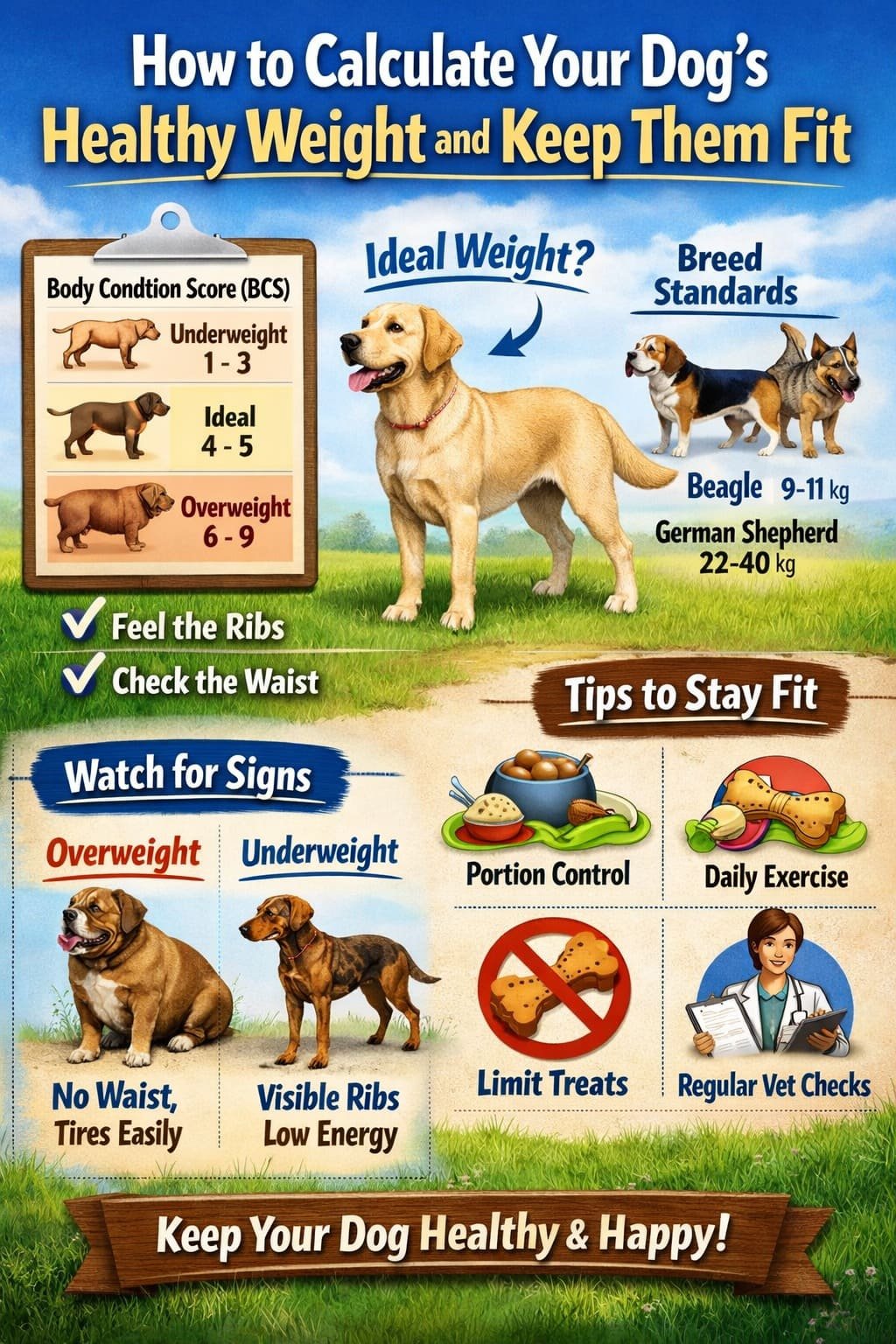
Maintaining a healthy weight is one of the most important factors in ensuring your dog lives a long, active, and pain-free life. Just like humans, dogs that are overweight face higher risks of joint problems, heart disease, diabetes, and reduced mobility. On the other hand, dogs that are underweight may suffer from weakness, poor immunity, and nutritional deficiencies.
Knowing how to evaluate your dog’s ideal weight helps you prevent health problems before they start.
A healthy weight supports:
Studies show that dogs kept at a lean body condition may live up to two years longer than overweight dogs.
Veterinarians use the Body Condition Score (BCS) system to assess whether a dog is underweight, ideal, or overweight. The scale typically ranges from 1 to 9.
BCS Guide:
How to check at home:
✔ Feel your dog’s ribs — you should feel them easily without pressing hard.
✔ Look from above — the waist should be visible behind the ribs.
✔ View from the side — the abdomen should tuck upward.
If ribs are hidden under fat and the waist is not visible, your dog is likely overweight.
Each breed has an average healthy weight range. For example:
However, age, gender, and body structure also affect ideal weight. Use breed standards as a guideline — not a strict rule.
If your dog is overweight, you can estimate ideal weight using:
Ideal Weight = Current Weight × (100 ÷ Current BCS %)
Example:
If your dog weighs 30 kg and has a BCS of 7 (≈ 20% overweight):
30 × (100 ÷ 120) = 25 kg ideal weight
A veterinarian can provide a more precise target.
Weight alone does not tell the whole story. A healthy dog should have:
✔ Visible waist
✔ Tucked abdomen
✔ Firm muscles, not soft fat
✔ Easy movement without fatigue
Muscle loss with fat gain can occur even if weight seems normal.
Signs your dog may be overweight:
Signs your dog may be underweight:
Feed appropriate portions: Follow feeding guidelines and avoid overfeeding.
Limit treats: Treats should not exceed 10% of daily calories.
Daily exercise: Regular walks, playtime, and mental stimulation help burn calories.
Avoid table scraps: Human food can add hidden calories and unhealthy fats.
Regular vet checkups: Routine visits help track weight changes and catch health issues early.
Seek professional advice if:
A vet can rule out thyroid disorders, metabolic issues, or other health conditions.
Understanding how to calculate and monitor your dog’s healthy weight is essential for responsible pet care. By regularly checking body condition, comparing breed standards, and maintaining proper diet and exercise, you can help your dog stay active, comfortable, and disease-free.
A healthy weight doesn’t just improve your dog’s appearance — it enhances quality of life and ensures more happy years together.
Q1. How can I tell if my dog is overweight?
If you cannot feel your dog’s ribs easily and there is no visible waistline when viewed from above, your dog may be overweight.
Q2. What is the ideal body condition score for dogs?
A Body Condition Score between 4 and 5 on a 9-point scale is considered ideal for most dogs.
Q3. How often should I check my dog’s weight?
You should monitor your dog’s weight monthly and observe body shape regularly to detect changes early.
Q4. Can breed standards determine my dog’s ideal weight?
Breed weight ranges provide guidance, but age, gender, and body structure also influence a dog’s healthy weight.
Q5. What should I do if my dog needs to lose weight?
Reduce calorie intake, limit treats, increase daily exercise, and consult a veterinarian for a safe weight-loss plan.
Image Credits: Created by ChatGPT using DALL·E (OpenAI).
To know more about our platform, visit our About Us page.


Comments