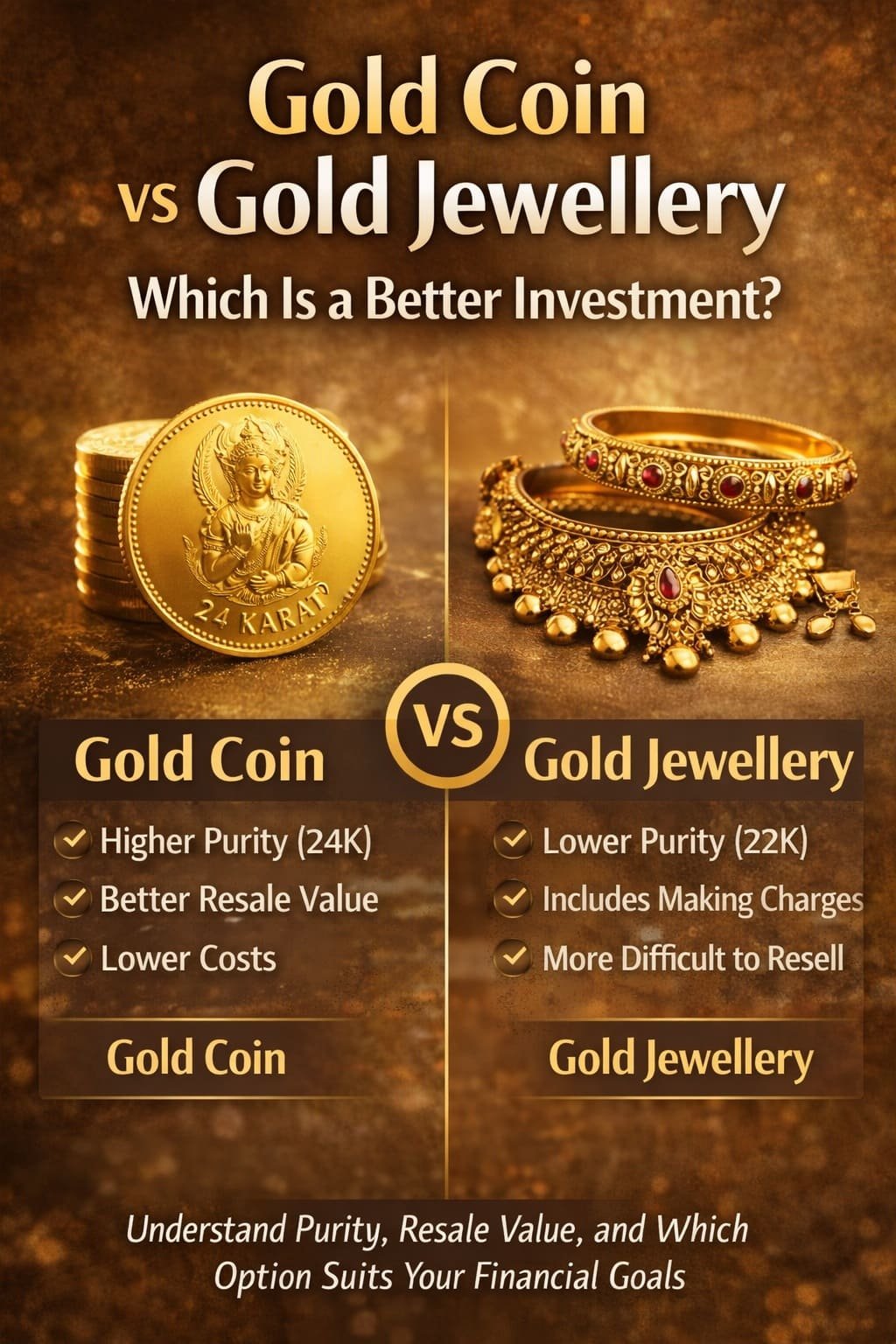
Gold has always held a special place in Indian households—not just as a symbol of wealth and tradition, but also as a trusted investment. When people decide to invest in gold, the most common question they face is whether to buy gold coins or gold jewellery. While both involve owning physical gold, their investment value, costs, and returns can be very different.
Understanding these differences can help you make a smarter financial decision based on your goals.
Gold coins are primarily bought for investment purposes. They are available in various weights, usually ranging from 1 gram to 50 grams, and are often made of high-purity gold such as 24 karat.
One of the biggest advantages of gold coins is their high purity and transparency. Since they have minimal or no additional charges apart from the gold price and GST, the resale value is closely linked to the current market rate of gold. This makes gold coins a straightforward and relatively liquid investment.
Gold coins are also easy to store and can be sold at banks, jewellers, or gold dealers with fewer complications.
Gold jewellery serves a dual purpose—it can be worn and also holds value as gold. However, from a pure investment perspective, jewellery has certain limitations.
Jewellery prices include making charges, design costs, and sometimes brand premiums. These charges are usually not recovered at the time of resale. Additionally, most jewellery is made from 22 karat gold, which is slightly less pure than 24 karat gold used in coins.
While jewellery may appreciate in value due to rising gold prices, the resale amount is often reduced after deducting making charges and wastage.
Gold coins generally offer higher purity and better resale value. Since they are standardized and often hallmarked, buyers face fewer issues during resale.
In contrast, gold jewellery’s resale value depends on purity, design, and condition. Many jewellers deduct making charges and may also reduce value due to wear and tear.
If your primary goal is wealth preservation or long-term investment, gold coins usually provide better returns.
Gold coins are easier to sell because they are viewed as investment-grade gold. Banks, NBFCs, and jewellers are more willing to buy gold coins without extensive testing.
Gold jewellery may require melting or detailed purity checks, and resale conditions vary from one jeweller to another. This can make the selling process slower and less predictable.
Gold jewellery holds emotional and cultural value, especially in weddings and family traditions. It offers utility beyond investment, which gold coins do not.
Gold coins, on the other hand, are purely financial assets. They do not provide aesthetic or emotional satisfaction but are more efficient from an investment standpoint.
Both gold coins and jewellery attract GST at the time of purchase. However, jewellery includes additional making charges that increase the initial cost.
From a long-term perspective, gold coins often turn out to be more cost-effective due to lower associated expenses.
If your goal is pure investment, wealth protection, and easy resale, gold coins are generally the better choice. They offer higher purity, lower costs, and more transparent pricing.
If you value tradition, aesthetics, and occasional use, gold jewellery makes sense, though it may not deliver the same investment efficiency.
Both gold coins and gold jewellery have their place, but they serve different purposes. Gold coins are better suited for investors looking for clean, long-term returns, while gold jewellery appeals to those who want a mix of emotional value and asset ownership. The right choice ultimately depends on whether you see gold as an investment tool or a personal possession with financial value attached.
Disclaimer: This article is for informational purposes only and should not be considered financial advice. Please consult a qualified financial advisor before making any investment decisions.
To know more about our platform, visit our About Us page.


Comments