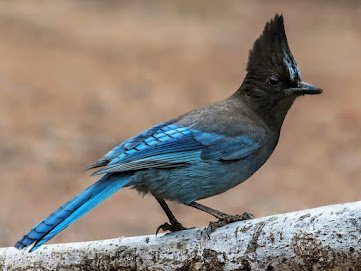
Steller's jays are among the most recognizable birds in North America, known for their striking blue-and-black feathers, loud calls, and remarkable intelligence. These curious birds are frequent visitors to forests, campgrounds, and even backyard bird feeders. While many people enjoy watching them, some bird enthusiasts become concerned after noticing Steller's jays near the nests of smaller birds.
So, do Steller's jays eat baby birds? The answer is yes, but only occasionally. Although they are capable of preying on nestlings and eggs, baby birds are not the primary part of their diet. Steller's jays are opportunistic omnivores, meaning they eat a wide variety of foods depending on what is available.
In this article, we'll explore what Steller's jays eat, why they sometimes raid nests, and what you can do to help protect nesting birds in your backyard.
Yes, Steller's jays may eat baby birds, eggs, or newly hatched chicks if they discover an unattended nest. However, this behavior is opportunistic rather than habitual.
These birds are intelligent foragers. If they come across an easy meal, especially during the breeding season when they need extra energy to feed their own young, they may take advantage of the opportunity.
That said, most Steller's jays spend the majority of their time eating seeds, nuts, fruits, insects, and other natural foods.
Nest raiding is a natural behavior that helps many wild birds survive. Steller's jays are no exception.
Several factors encourage this behavior.
Eggs and nestlings provide a rich source of protein and fat, which are especially valuable during the breeding season.
If a nest is poorly hidden or left unguarded, a jay may quickly take advantage of the opportunity.
Parent jays need large amounts of food while raising their own young. Protein-rich prey helps support the rapid growth of their chicks.
Although they occasionally prey on nests, their regular diet is much more varied.
Common foods include:
Their flexible diet allows them to adapt to different habitats throughout the year.
No.
Contrary to popular belief, baby birds make up only a small portion of a Steller's jay's overall diet.
Most of the year, they rely on:
Nest predation usually increases during spring and early summer when many birds are breeding.
Ground nests and open-cup nests are generally more vulnerable.
Species that may occasionally lose eggs or chicks to Steller's jays include:
However, predators such as squirrels, raccoons, snakes, crows, and domestic cats often raid nests as well.
Generally, no.
Although they sometimes eat eggs or nestlings, this behavior is a normal part of the ecosystem. Predation has existed among birds for millions of years and helps maintain ecological balance.
Healthy bird populations usually remain stable because:
Nature has evolved with these interactions over countless generations.
Steller's jays belong to the crow family, one of the most intelligent groups of birds.
They can:
Their intelligence makes them highly successful foragers and explains why they sometimes locate hidden nests.
If you enjoy attracting songbirds to your yard, there are several ways to reduce the chances of nest predation.
Native bushes and evergreen trees provide better cover for nesting birds.
Repeatedly checking nests can accidentally reveal their location to predators.
Domestic cats are responsible for far more bird deaths than jays.
Providing bird feeders away from nesting sites may reduce encounters between Steller's jays and smaller birds.
Natural landscaping creates safer nesting habitat and supports insects that many songbirds rely on for feeding their chicks.
Generally, no.
Steller's jays are native wildlife and play an important role in forest ecosystems. Besides dispersing seeds, they help control insect populations and contribute to healthy ecosystems.
Rather than trying to remove them, it's better to create habitat that gives smaller birds more places to hide and nest safely.
Steller's jays do eat baby birds and eggs on occasion, but this behavior is only one small part of their varied diet. As intelligent, opportunistic omnivores, they take advantage of available food sources, especially during the breeding season when feeding their own chicks.
Although witnessing nest predation can be upsetting, it is a natural process that has long been part of healthy ecosystems. By creating bird-friendly habitats with dense vegetation, native plants, and safe nesting spaces, you can support a wide variety of birds while allowing nature to maintain its delicate balance.
No. While they may occasionally prey on nestlings, baby birds are only a small part of their overall diet.
Yes. They sometimes eat eggs when they discover unattended nests.
They can be bold and territorial, especially during breeding season, but they are not considered dangerous to people.
No. They are native birds that play an important ecological role. Instead, provide better nesting cover for smaller birds.
They especially enjoy acorns, pine seeds, sunflower seeds, berries, insects, and peanuts.
Comments